Stye vs Chalazion: How to Tell Which Eyelid Bump You Have and What to Do
Finding a tender lump on your eyelid, right where the lashes grow, is unsettling. It can make the whole lid look puffy, make your eye feel gritty, and send you straight to a search engine at midnight. The good news is that most eyelid bumps turn out to be one of two very common, usually harmless conditions: a stye or a chalazion.
They look alike at first glance, and people swap the names all the time. But they are not the same thing. One is typically a small infection at the base of a lash or in an eyelid gland. The other is a blocked oil gland that has become inflamed. That difference changes how fast the bump appears, how much it hurts, how long it lingers, and when it is worth seeing a doctor.
This guide lays out the differences in plain language, using public health and eye-care sources such as the NHS, Moorfields Eye Hospital, MedlinePlus and Harvard Health. It is general information, not a diagnosis, and it cannot replace an exam by an eye-care professional.
Stye vs chalazion at a glance
MedlinePlus describes a chalazion as a blocked oil gland that forms a small bump in the eyelid. A stye, by contrast, is generally described as an infection. Here is how the two typically compare, based on the sources listed at the end of this article:
| Feature | Stye (hordeolum) | Chalazion (meibomian cyst) |
|---|---|---|
| Main cause | Bacterial infection of a lash follicle or eyelid gland | Blocked oil (meibomian) gland, not an active infection |
| Pain | Usually sore and tender | Often firm and not very painful |
| Speed of onset | Over a day or two | Gradual, over days to weeks |
| Typical location | At the lash line, sometimes inside the lid | Usually a little further back on the lid |
| Typical duration | About a week or two | Often a month or more |
| Appearance | Red lump, may show a yellow spot | Smooth, rounded, firm lump |
These are patterns, not rules. Even clinicians sometimes find the two hard to separate by eye, which is one reason a persistent bump deserves a proper look.
What is a stye?
A stye (the medical term is hordeolum) is a small, painful lump on or inside the eyelid. The NHS describes it as a common problem that should go away within about a week and is rarely a sign of anything serious. Moorfields Eye Hospital explains that a typical external stye is a small abscess at the root of an eyelash, appearing as a red lump that often develops a yellow spot in the middle.
Two kinds of stye
- External stye: forms along the edge of the eyelid where a lash emerges. It is the type most people picture, and it can look like a pimple on the lash line.
- Internal stye: develops inside the eyelid, in an oil gland. You may feel a lump and notice swelling without seeing much on the surface.
Common stye symptoms
- A tender, red lump on or in the eyelid
- Swelling of the lid, sometimes the whole lid
- A watery or gritty-feeling eye
- Redness around the lump
- A small yellow pus point that may form and drain by itself
The NHS notes that vision should not normally be affected by a stye. Styes usually appear in one eye at a time, though it is possible to have more than one.
What is a chalazion?
A chalazion forms when one of the tiny meibomian glands in the eyelid, which release the oils that help keep your tears from evaporating, becomes blocked. MedlinePlus explains that a chalazion often develops after an internal stye: the redness and swelling fade, but the blocked gland does not drain, leaving a firm, non-tender nodule.
Harvard Health describes how a chalazion may start out red and swollen for a few days, then settle into a painless, slowly growing, rubbery round lump. Because it is a reaction to trapped oil rather than an active bacterial infection, it tends to hurt less than a stye but stay around longer.
Common chalazion symptoms
- A firm, round bump in the eyelid, often with little or no pain
- Mild redness or swelling at the start
- Occasionally blurred vision if the lump grows large enough to press on the eye
MedlinePlus notes that a large chalazion can press on the cornea and cause astigmatism, which blurs vision, and that this improves once the chalazion is treated.
How can you tell them apart?
Eye-health sources suggest asking a few simple questions. None of them is perfect on its own, but together they point in a direction.
- How did it start? A sore bump that appeared within a day or two leans toward a stye. A lump that crept up over weeks leans toward a chalazion.
- Does it hurt? The NHS-linked guidance in Wales describes a painful, pimple-like lump as a likely stye and a hard, not very painful lump as a likely chalazion.
- Where is it? Right at the lash line suggests a stye. Further back on the lid suggests a chalazion.
- Is there a lump at all? Moorfields points out that a swollen, red, watery eyelid with no distinct lump is more likely to be blepharitis or conjunctivitis than a stye.
Sometimes a stye turns into a chalazion, so the answer can change over a couple of weeks. That is normal and not a sign you did anything wrong.
Why do these bumps happen?
Eyelid glands and lash follicles can be blocked or infected for several reasons. The sources reviewed for this article mention these risk factors:
- Long-term eyelid inflammation. The NHS and Moorfields both link long-term blepharitis to a higher chance of styes. If your lid edges are often crusty or itchy, our guide to eyelid inflammation and Demodex explains how that can affect the lash line.
- Skin conditions. The NHS lists rosacea as a risk factor.
- Eyelid hygiene and eye makeup. Specsavers lists poor lid hygiene and eye makeup among factors that can make a stye more likely. Sleeping in eye makeup or sharing it can leave residue and bacteria at the lash line, so gentle removing eye makeup habits matter.
- Touching or rubbing the eyes. Harvard Health advises keeping hands clean, not rubbing the eyes and not sharing eye makeup, especially if you have had these bumps before.
- Having had one before. People who get one eyelid bump are more likely to get another.
Home care: what eye-health sources recommend
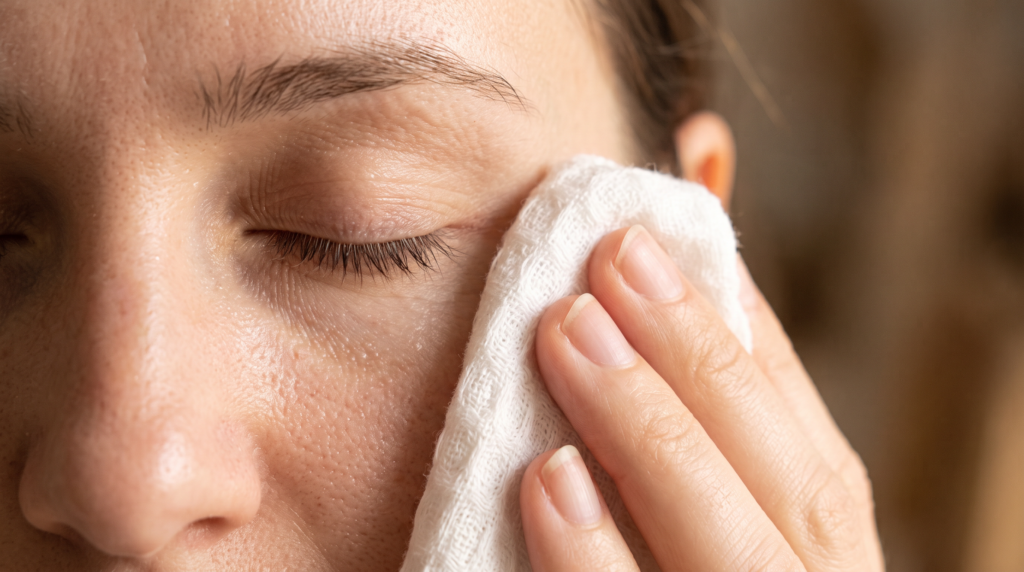
For both conditions, the first-line step described by the NHS, Harvard Health and MedlinePlus is simple: warm compresses.
How to use a warm compress
- Wash your hands thoroughly.
- Soak a clean washcloth in warm (not scalding) water and wring it out.
- Hold it gently against the closed eyelid for roughly 5 to 10 minutes, as the HSE and Harvard Health describe.
- Repeat several times a day, and re-warm the cloth as it cools.
- Use a fresh, clean cloth each time, especially if a stye starts to drain.
The warmth is thought to soften hardened oils and help a gland drain. Harvard Health says a stye that fails to drain can be opened by a doctor, and that a chalazion not gone after about six weeks may need to be treated surgically under local anesthesia.
What not to do
- Do not squeeze or pop the bump. MedlinePlus specifically says not to push or squeeze a chalazion, and Harvard Health says pus should never be removed by squeezing. Squeezing can spread infection or injure the lid.
- Skip eye makeup near the bump while it heals, and replace products that touched the area if you are worried about contamination.
- Take a break from products that sit on the lash line, such as eyeliner, until it settles.
- Avoid scrubbing hard. Gentle lid cleaning is different from aggressive rubbing.
When to see a doctor
Most styes and chalazia improve with time and warm compresses. But some situations call for professional help. Based on the NHS, Harvard Health, MedlinePlus and Welsh NHS guidance, consider an appointment with a GP, optometrist or eye doctor if:
- Your vision changes or blurs
- A bump has not improved after about a week of warm compresses (Harvard Health) or keeps growing
- A chalazion lasts several weeks without shrinking
- Redness spreads across the whole eyelid or beyond it
- The eyelid is red, hot, very swollen, blistered or severely painful
- The pain is in the eye itself rather than the eyelid
- Your eyelid droops suddenly
- The same bump keeps returning in the same spot
That last point matters. MedlinePlus notes that, rarely, skin cancer of the eyelid can look like a chalazion, which is why a clinician may suggest a biopsy for a lump that persists or recurs. Harvard Health makes a similar point about very rare eyelid tumors. Such cases are uncommon, but they are the reason a stubborn bump should be examined rather than ignored.
What a clinician may offer
- For a stye: warm-compress guidance, sometimes an antibiotic ointment, or drainage if it does not clear.
- For a chalazion: continued warm compresses, a steroid injection to reduce swelling, or a small procedure to drain and remove the contents if it is large or persistent.
- For underlying causes: treatment of blepharitis, rosacea or meibomian gland problems to reduce the chance of repeats.
Eyelid bumps and your lash routine
Because these bumps sit at the lash line, many readers wonder whether their lash habits played a part. The sources reviewed here discuss hygiene, eye makeup, blepharitis and skin conditions. They do not single out lash serums, so this article does not claim a link in either direction.
What is reasonable is to keep the lash line clean and calm while a bump heals:
- If you use a lash serum and notice a sore lump, redness or swelling, pause and ask a clinician, particularly if the lid is red, swollen or itchy. Our posts on lash serum irritation and allergic reactions explain how to tell irritation from something that needs medical care.
- Clean makeup and residue off properly each night. Our guide to cleaning your eyelashes covers gentle routines.
- Be gentle with tools. Our look at eyelash curlers explains how tugging and pinching can stress the lash line.
- Do not mistake a lash that grows the wrong way for a stye. A lash growing toward the eye can irritate the lid and surface; see our article on ingrown lashes for how that differs.
How to lower your chance of another bump
- Wash your hands before touching your eyes or applying anything near them.
- Do not share eye makeup or applicators.
- Remove eye makeup before sleep.
- If your eyelids are often crusty or flaky, ask an eye-care professional about daily lid hygiene. The sources reviewed mention warm compresses and gentle lid cleaning for people who get repeat bumps.
- Do not rub your eyes.
- Follow cleaning and replacement guidance for any contact lenses you wear.
Key Takeaways
- A stye is typically a painful, infection-related lump at the lash line or inside the lid. A chalazion is usually a firmer, less painful lump from a blocked oil gland.
- Styes often settle in a week or two. Chalazia commonly take a month or longer.
- A stye can leave behind a chalazion once the infection clears.
- Warm compresses are the usual first step for both. Never squeeze or pop either one.
- See a clinician for vision changes, spreading redness, severe pain, a bump that will not shrink, or one that keeps coming back.
- Bumps that recur in the same place should be examined, because rare serious conditions can imitate a chalazion.
Frequently asked questions
Is a stye contagious?
A stye is caused by bacteria, but sources such as the NHS describe it as an eyelid problem that is rarely serious, not the kind of spreading infection you catch from a person like pink eye. Even so, wash your hands, avoid touching the bump and use your own towels and cloths.
Can a stye turn into a chalazion?
Yes. MedlinePlus and Harvard Health both describe how a stye can leave behind a blocked gland that becomes a firm, painless chalazion after the infection settles.
How long does a chalazion take to go away?
MedlinePlus says a chalazion will often go away without treatment in a month or so. Harvard Health notes that some last more than a couple of months, and that one lasting beyond about six weeks may need treatment by an eye specialist.
Should I wear makeup or contact lenses with an eyelid bump?
It is usually kinder to avoid eye makeup near the bump until it heals, and to ask your eye-care professional whether you should pause contact lenses if the eye is sore or red. If you also use a lash serum, our guide to lash serum and contact lenses explains what labels say about lens routines.
Can I pop a stye or chalazion myself?
No. Sources including MedlinePlus, Harvard Health and Healthline advise against squeezing or popping eyelid bumps, because it can spread infection or damage the lid. If a bump needs draining, a clinician can do it safely.
Could an eyelid bump be something more serious?
Rarely. MedlinePlus and Harvard Health both note that eyelid cancer can occasionally resemble a chalazion. That is why a lump that persists, grows, bleeds or keeps returning in the same place should be checked by an eye doctor.
This article is for general information only and is not medical advice. If you have eye pain, vision changes, a swollen or very red eyelid, or any eye or eyelid concern, talk to a licensed clinician. Lashona products are not a treatment for eyelid infections or lumps.
Sources
- NHS: Stye (nhs.uk/conditions/stye)
- Moorfields Eye Hospital: Stye (moorfields.nhs.uk)
- MedlinePlus (US National Library of Medicine): Chalazion (medlineplus.gov/ency/article/001006.htm)
- Harvard Health Publishing: Styes and chalazions (health.harvard.edu)
- 111 Wales (NHS Wales): Eyelid problems (111.wales.nhs.uk)
- HSE Ireland: Stye (hse.ie/conditions/stye)
- Specsavers: What is a stye? (specsavers.co.uk/eye-health/stye)
- All About Vision: Chalazion (allaboutvision.com)
- Healthline: Chalazion vs hordeolum (healthline.com)