
Do Eyelash Curlers Damage Your Lashes? What to Know Before You Curl
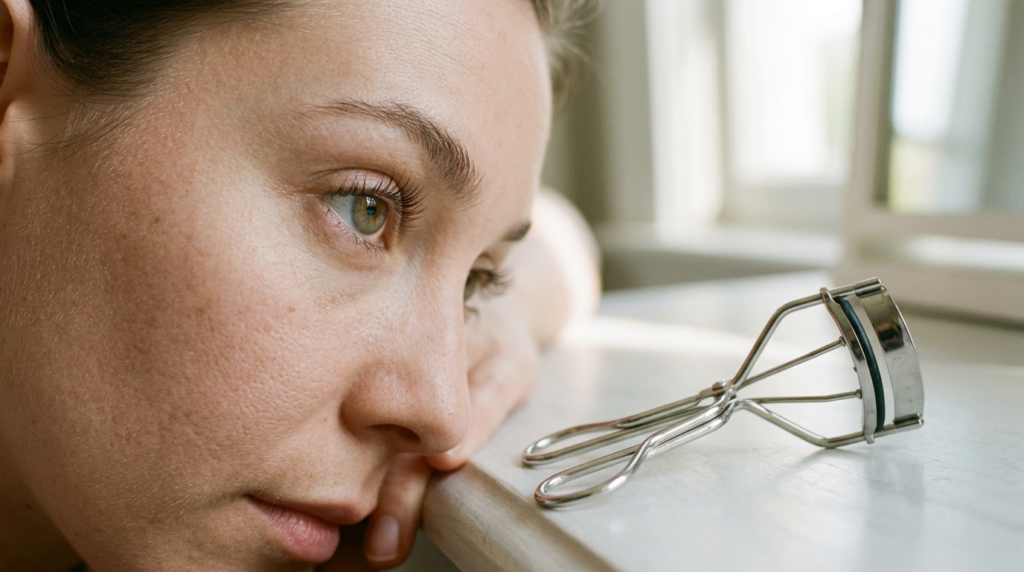
Few beauty tools are as small, cheap and widely used as the eyelash curler. It is also one of the tools people worry about most. If you have ever pulled a curler away and found a few lashes stuck in the pad, you have probably wondered whether the habit is costing you length.
The short answer is that a curler is not automatically harmful, but technique and timing matter a great deal. This guide walks through how curlers can stress lashes, what changes the risk, and how to curl more gently. It also covers the situations where lash loss is a sign of something else entirely.
Lashes are fine hairs that sit very close to the surface of the eye. That is why the way you handle them, and the tools you place near the eye, deserve a little more care than a hairbrush would.
Before the details, one point of context: eye-area products and tools are not held to a single universal standard, so general safety habits count for a lot. The FDA’s guidance on eye cosmetic safety is a useful baseline for anything you bring near your eyes.
Key Takeaways
- A curler can break or pull lashes when it is pressed too hard, used on lashes coated in mascara, or used with a worn or misaligned pad.
- Gentle, brief pressure on clean, dry lashes is the lower-risk approach for most people.
- The American Academy of Ophthalmology advises against using a hairdryer to curl lashes and points to purpose-made heated curlers instead.
- Any tool near your eyes should be clean, and eye makeup should be replaced on a regular schedule.
- Persistent shedding, bald patches, crusting or redness are not curler problems. They are a reason to see a licensed clinician.
How can an eyelash curler damage lashes?
A curler works by clamping a row of lashes between a metal frame and a rubber pad, then bending them upward. Everything that can go wrong comes from one of three things: too much force, too much stickiness, or too much wear.
Pressure that is too hard or too long
Lashes are flexible, but they are not unlimited in how far they will bend. Squeezing hard, or holding the clamp for a long time, can create a sharp crease. A creased lash is weaker at that point and may snap there later.
Curling over mascara
Mascara can glue neighbouring lashes together. If you clamp them and then pull the curler away, the lashes may stay stuck to the pad and be tugged from the lash line. This is the most common reason people find lashes in the curler.
A worn or misaligned pad
Rubber pads harden, flatten and crack with age. A pad with a ridge or a gap can pinch a few lashes harder than the rest. If the frame is bent, it can also pinch skin from the eyelid, which is painful and best avoided.
Rough handling on fragile lashes
Lashes that are already thin or brittle, for example after extensions or heavy makeup use, have less margin for error. If that sounds familiar, the notes in our guide to damaged lashes are a sensible place to start.
Is the curler really the cause? Reading the signs
Finding a lash in the curler does not prove the curler caused a problem. Lashes have a natural life cycle and a few shed every day as part of normal turnover. If you want the background on how that cycle works, see our explainer on the eyelash growth cycle.
These clues help separate the two:
- Broken pieces versus whole lashes. A short, blunt fragment suggests breakage. A full lash with a tiny bulb at the end suggests it was pulled out or shed.
- A pattern that matches your curling. Lashes that look kinked or bent at the same point along their length often point to pressure from the clamp.
- Timing. If the loss started after a new tool, a new mascara, or a change in how you curl, that is useful information.
- Other symptoms. Redness, itching, flaking or swollen lids point away from the curler and toward something that needs a clinician’s attention.
Heated curlers, regular curlers and hairdryers: what is the difference?
People often ask whether heat makes curling safer or riskier. The honest answer is that it depends on how the tool is designed and how you use it.
Regular metal curlers
These rely on mechanical pressure only. Used lightly on clean lashes, they are what most people mean by a standard curler. The risks are the pressure and stickiness issues described above.
Heated curlers
Heated curlers are wand-style tools that warm the lashes to help them hold a curl. In an answer published on its website, ophthalmologist Dr. Ashley Brissette of the American Academy of Ophthalmology recommended a heated eyelash curler over a hairdryer because these tools are designed for use near the eye and have built-in temperature limits. That is a statement about design intent. It does not mean any heated tool is risk-free, so follow the manufacturer’s instructions and stop if you feel heat or discomfort.
Hairdryers
The same AAO answer says plainly that using a hairdryer on lashes is not recommended. Forced air can dry and irritate the eye, and a hairdryer is not designed for the delicate tissue of the eyelid. The AAO notes that scratches to the cornea can become infected and, in severe cases, affect vision. Treat this one as a hard no.
How to curl lashes more gently: a step-by-step routine
- Start with clean hands and a clean tool. The FDA advises making sure any instrument you place in the eye area is clean. Wipe the frame and pad with a suitable cleanser and let them dry.
- Curl before mascara, never after. Mascara that is already on the lashes, wet or dry, makes them stick to the pad.
- Check the pad. If it is cracked, flattened or hard, replace it. Most curlers sell spare pads.
- Position carefully. Open your eye slightly, bring the curler in from the side, and make sure only lashes, not eyelid skin, sit between the clamp and the pad.
- Press lightly and briefly. A few gentle pulses along the length of the lashes is usually enough. There is no need to squeeze hard or hold for a long time.
- Release before you pull away. Open the curler fully before moving it. Pulling while still clamped is what yanks lashes out.
- Never use a curler while moving. The FDA specifically warns against applying or removing eye cosmetics in a moving vehicle, and the same logic applies to any tool near the eye.
What if you wear lash extensions or have had a lash lift?
Curlers and extensions do not mix well. Clamping extended lashes can bend or dislodge them and may stress the natural lash underneath. If you have extensions, ask your lash artist what they advise, and see our notes on lashes after extensions for how natural lashes can look once the set comes off.
After a lash lift, the lashes have already been curled chemically, so a curler is usually unnecessary and may be unwise until your technician says otherwise. Our article on lash lifts and lash serum covers how salon treatments and home routines can overlap.
Does mascara matter as much as the curler?
Often it matters more. Heavy, clumpy or dried-out mascara adds weight, makes lashes stick together, and takes effort to remove. That removal step, especially rubbing, is a common source of lash loss.
The American Academy of Ophthalmology advises taking off all eye makeup before sleep, especially mascara, because makeup that is not removed properly can irritate the eyes. It also suggests replacing eye makeup about every three months. The FDA notes that manufacturers usually recommend discarding mascara two to four months after purchase, and that you should never share eye cosmetics.
For removal technique, our guide to makeup removal for lashes walks through gentle methods. If you are comparing mascara with other lash products, lash serum versus mascara explains how they differ.
Common curler mistakes to avoid
- Squeezing as hard as possible to get a dramatic curl.
- Curling lashes that are already coated in mascara.
- Using a cracked, hardened or missing pad.
- Sharing curlers or borrowing a friend’s tool.
- Curling every lash in one big clamp instead of working in small sections.
- Forcing a curl on lashes that are sparse or brittle.
Can I protect lashes while still curling them?
You can lower the risk, though no routine removes it completely. Keep pressure light, curl on bare lashes, and replace worn pads. Beyond the curler itself, general habits help too. Our overview of lash damage prevention and the tips on preventing lash breakage cover everyday behaviours such as rubbing the eyes less and handling lashes gently.
If you simply want a softer lift without any tool, you could skip curling on some days and give lashes a rest. Variety in your routine reduces how often any one habit stresses the same lashes.
When is lash loss a sign of something other than curling?
Curlers are a convenient suspect, but lashes can thin for many reasons unrelated to beauty tools. These include eyelid inflammation, skin conditions, allergic reactions and some medical conditions or treatments. It is worth getting checked if you notice:
- Lashes falling out in clumps or leaving bare patches.
- Crusting, flaking or a gritty feeling along the lash line, which can go along with eyelid inflammation. Our article on blepharitis and Demodex explains what eye doctors look for.
- Persistent redness, swelling, burning or pain.
- Vision changes or sensitivity to light.
For a broader look at causes, see why eyelashes fall out. None of this is a substitute for an examination. A licensed eye-care professional can look at the lid margin and lash follicles directly.
Do I need to stop curling altogether?
Not necessarily. Many people curl their lashes for years without noticing any problem, particularly when they use a light touch and a clean, well-maintained tool. Others find their lashes break more easily and decide to pause. Both are reasonable.
A practical approach is to change one thing at a time. If you suspect the curler, try gentler pressure or a fresh pad for a few weeks, and keep an eye on whether you find fewer broken lashes. If nothing changes, the curler was probably not the main factor.
Frequently asked questions
Can eyelash curlers make lashes fall out permanently?
Pulling a lash out does not normally damage the follicle in a way that stops regrowth, and lashes typically grow back over several weeks. Repeated trauma or an underlying condition is a different matter. If lashes do not return, see a clinician.
Is it better to curl lashes before or after mascara?
Before. Curling over mascara makes lashes stick to the pad and increases the chance they are pulled out when you release the curler.
Are heated eyelash curlers safer than regular ones?
Not automatically. The AAO suggests a heated curler designed for the eye is a better choice than a hairdryer, but that is a comparison with a hairdryer, not a guarantee that heated tools are safer than standard ones. Follow the instructions and avoid heat that feels uncomfortable.
How often should I replace the pad on my curler?
There is no universal schedule. Replace it when it looks cracked, flattened or hardened, or when the curler starts to pinch unevenly. Many brands recommend changing pads every few months with regular use, so check what your manufacturer says.
Can I use a curler while using a lash serum?
Many people do, but the lashes and lids may be more sensitive when using some serums, so pressure should stay light. If you use a prescription product, ask the prescriber. Our article on lash serum safety covers general precautions. Bimatoprost is a prescription drug in the United States, so a clinician is the right person to ask about it.
Should I stop curling if my eyes feel irritated?
Yes. Stop using eye makeup and tools until the irritation settles. The FDA advises avoiding eye cosmetics if you have an eye infection or inflamed skin around the eye, and discarding products you were using when an infection occurred.
A note on medical advice
This article is general information, not medical advice. If you have pain, vision changes, ongoing redness or unexplained lash loss, talk to a licensed clinician such as an ophthalmologist or optometrist.
Sources
- U.S. Food and Drug Administration, “Eye Cosmetic Safety” (fda.gov/cosmetics/cosmetic-products/eye-cosmetic-safety).
- American Academy of Ophthalmology, “Eye Makeup” tips and prevention page (aao.org/eye-health/tips-prevention/eye-makeup).
- American Academy of Ophthalmology, Ask an Ophthalmologist: “Is it safe to curl your eyelashes with a hairdryer?” answered by Ashley R. Brissette, MD (aao.org/eye-health/ask-ophthalmologist-q/safe-curl-eyelashes-hairdryer-eyes).

