Are Magnetic Eyelashes Safe? What Eye-Health Sources Say About Breakage, Irritation and MRI Scans
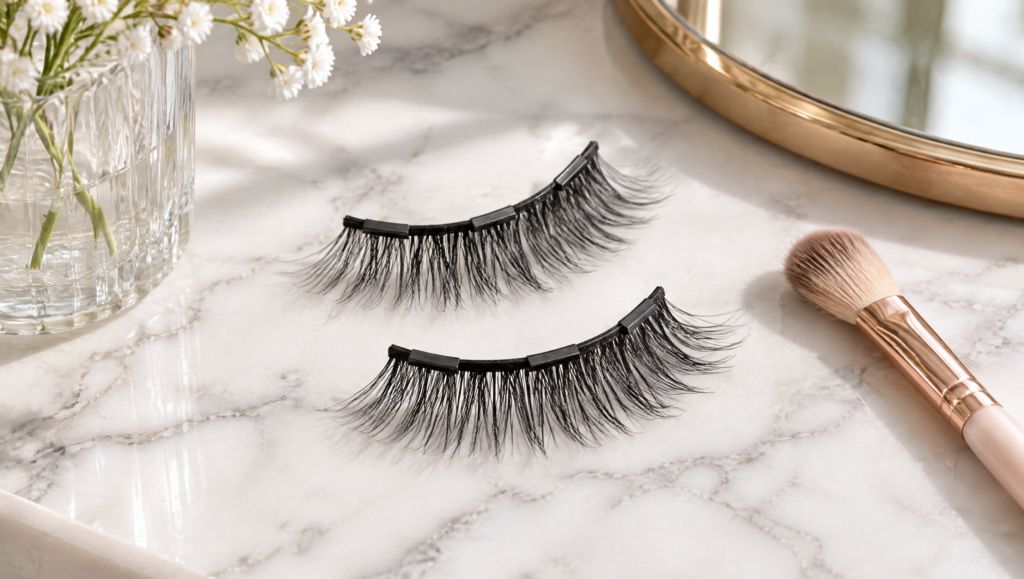
Magnetic eyelashes promise the look of falsies without the glue. Instead of adhesive, small magnets hold the lashes in place, either by clamping a pair of strips around your natural lashes or by clinging to a magnetic eyeliner. It is easy to assume that “no glue” means “no problem.”
The reality is more mixed. Dropping the adhesive removes one well-known risk, but it can add others, mostly mechanical: pressure on the lash line, tugging at removal, and a few quirks such as MRI scans. This guide walks through what eye-health sources say, what is still unknown, and how to wear them more carefully if you decide to.
Much of the online chatter about magnetic lashes comes from sellers and beauty blogs. So this post leans on an ophthalmology organisation, a US regulator’s consumer page and a mainstream health publication, and it says plainly where the evidence is thin. It is general information, not a diagnosis.
Key Takeaways
- An eye-doctor Q&A says magnetic lashes and magnetic eyeliner can be used safely when applied carefully and as instructed, but they may irritate the eye or eyelid.
- The same source warns that compressive magnetic lashes (the sandwich style) may cause breakage of natural lashes.
- Magnetic lashes should not be used in an MRI scanner, so remove them and tell the imaging team about any magnetic products.
- One ophthalmologist quoted in consumer press said heavy magnetic strips could, over time, weigh on the lid and cause lash loss from repeated tugging. That is an expert comment, not trial data.
- Stop wearing them if you have pain, redness, swelling or vision changes, and see an eye doctor if symptoms persist.
What are magnetic eyelashes, and how do they stay on?
There are two common designs. In the first, two thin strips with embedded magnets sit above and below your natural lashes and click together, so your own lashes are sandwiched in between. In the second, the false lash carries a tiny magnet and attaches to a line of magnetic eyeliner, which contains iron oxide, painted along the lash line.
Both are sold as reusable alternatives to strip false lashes, which need a liquid adhesive. Neither is a medical product. They are cosmetics, and the eyelid is a delicate place to wear anything for hours.
Are magnetic eyelashes safe? What eye doctors say
The most direct answer comes from eye doctors’ answer on magnetic lashes, published in 2020 by an ophthalmology organisation. It says that, similar to glue-on false lashes, magnetic eyeliner and magnetic lashes can be used safely when applied carefully and as instructed.
It then adds three cautions. They may cause eye irritation and eyelid irritation. They should not be used in an MRI scanner. And compressive magnetic lashes may cause breakage of normal eyelashes. If pain, irritation or other concerning symptoms appear, the advice is to stop using them and see an ophthalmologist.
Notice what that answer is and is not. It is a short expert opinion, not a clinical trial. None of the sources I reviewed gave a percentage of wearers who develop problems, so nobody can honestly say how common these issues are.
Can magnetic lashes break or pull out your natural lashes?
Possibly, and the sandwich design is the one flagged. Because the two strips pinch your own lashes between them, pressure lands on the lash shaft, and putting them on or taking them off can tug.
A 2021 AARP article quoted ophthalmologist Michelle Andreoli, MD, a clinical spokesperson for the American Academy of Ophthalmology, on the sandwich style. She said the extra weight can cause chronic lash loss from repeated tugging. I could only read a search snippet of that article, so treat it as a secondhand expert comment rather than a study.
There is also a parallel from lash extensions. An ophthalmology page on extensions says rubbing, tugging or pulling can fracture natural lashes and may even damage the follicle. That page is about glued-on fibres, not magnets, but the mechanism, repeated mechanical stress, is similar. If you already notice snapping or thinning, read our guide to lash breakage before you add another source of strain.
Warning signs your lashes are under strain
- Lashes that look shorter or blunt-ended after wearing strips
- Gaps or bare patches along the lash line
- A sore, tender or pulling feeling when strips come off
- Lashes coming out with the strip every time you remove it
Do magnetic lashes cause irritation or allergy?
They can. The ophthalmology answer specifically lists eye and eyelid irritation. That fits what you would expect from anything held against thin lid skin for hours: friction from the band, trapped makeup, and reactions to materials.
The FDA’s eye cosmetic page treats false eyelashes, extensions and their adhesives as cosmetics that must meet safety and labeling requirements. It notes that an allergic reaction, irritation or other injury in the eye area can be particularly troublesome, and it tells shoppers to check the ingredients. Magnetic liners are still products with ingredient lists, so that advice applies to them too, even though the page was written about adhesives. If you have reacted to lash glue before, our post on glue allergy explains the typical signs.
The FDA page’s safety checklist is useful for any eye product: stop using it if it causes irritation, and see a doctor if irritation persists. It also says to avoid eye cosmetics when you have an eye infection or inflamed skin around the eye, and to discard cosmetics you were using when an infection started.
Some people also report gritty, tired eyes with heavy lash products. That topic is covered in our post on lash products and dry eye, which separates what small studies suggest from what is still unclear.
Why do eye doctors mention MRI scans?
Magnetic eyeliner contains iron oxide, and magnetic lashes contain magnets. The ophthalmology answer is blunt on this point: they should not be used in an MRI scanner. The reason is simple physics, since an MRI machine uses a very strong magnetic field.
In practice, remove the lashes and wash off any magnetic liner before an appointment, and mention it to the imaging team if you are unsure. This is a quick habit that costs nothing.
Can heavy lashes affect the eyelid itself?
The same AARP piece quoted Dr. Andreoli as saying that, over time, the weight of sandwich-style magnetic lashes can cause eyelids to droop, a condition called ptosis. I did not find a clinical study measuring how often that happens, so it is best read as a cautionary expert view.
The practical takeaway is modest: if one lid looks lower than it used to, or your eyes feel heavy and tired after wearing strips, take a break and ask an eye doctor to look. Do not wait for it to become obvious.
Magnetic vs glue-on vs extensions: how do the concerns compare?
No head-to-head study was found in my search, so this table only summarises what the sources I read mention for each type. It does not rank them.
| Type | How it attaches | Concerns mentioned by the sources |
|---|---|---|
| Magnetic (sandwich) | Two magnetic strips clamp your lashes | Possible breakage, tugging at removal, irritation, MRI restriction |
| Magnetic liner plus lash | Lash clings to iron-oxide eyeliner | Eyelid irritation, MRI restriction |
| Glue-on strip lashes | Liquid adhesive on the lid | Allergy or irritation from adhesive, injury during application |
| Salon extensions | Fibres glued to individual lashes | Allergy, infection risk, lash fracture and follicle damage from pulling |
The honest summary is that “glue-free” is not the same as “risk-free.” Each option trades one set of problems for another, and the right choice depends on your skin, your lashes and how often you wear them.
How can you wear magnetic lashes more carefully?
These steps are general good practice drawn from the FDA checklist and the ophthalmology answer, not a guarantee of safety:
- Follow the instructions exactly. The ophthalmology answer ties safe use to careful application as instructed.
- Wash your hands first. The FDA notes that bacteria on your hands can cause infection if they reach the eye.
- Keep tools clean. Any applicator or tweezers near the eye should be clean.
- Do not apply or remove them in a moving vehicle. The FDA warns that a bump can scratch the eye.
- Remove them gently and promptly. Take them off at the end of the day, easing the strip away rather than yanking. Our tips on removing makeup gently apply to the liner underneath, too.
- Do not share them. The FDA advises against sharing eye cosmetics because another person’s bacteria may be hazardous to you.
- Give your lashes days off. This is common-sense advice rather than something the sources specify; fewer wear days means less cumulative tugging.
- Keep your mascara fresh. If you pair strips with mascara, remember the FDA’s guidance to discard mascara two to four months after purchase, and see our guide on when to replace mascara.
When should you stop and see an eye doctor?
Stop wearing the lashes and seek advice if you notice any of these:
- Eye pain, a feeling that something is stuck, or light sensitivity
- Persistent redness, swelling, itching or discharge
- Blurry or reduced vision
- A drooping lid or a lid that feels heavy
- Lashes falling out in clumps or leaving bare patches
Redness and discharge after eye makeup can also point to infection. Our article on pink eye and eye makeup explains what to throw away after an infection, and the FDA’s advice to discard products used during an infection applies here as well.
What if your own lashes are the reason you reach for strips?
Many people wear falsies because their natural lashes look sparse or short. Thinning has many possible causes, from rubbing and cosmetics to medical conditions, so it is worth working out why before covering it up. Our overview of how to regrow lost eyelashes covers common causes and what is realistic.
If lashes are falling out suddenly or you also notice patches elsewhere, a clinician can check for conditions that a lash product will not fix.
Frequently Asked Questions
Are magnetic lashes safer than glue-on lashes?
Not clearly. They avoid adhesive, so they sidestep glue allergy, but the ophthalmology answer still lists irritation and breakage risks, and the sources I found do not compare the two directly.
Can I sleep in magnetic eyelashes?
None of the sources I reviewed recommends it. Sleeping in them would add hours of pressure and friction, and pillow contact can tug at the strips, so removing them each night is the cautious approach.
Do I have to remove magnetic lashes before an MRI?
Yes. The ophthalmology answer says magnetic eyelashes and eyeliner should not be used in an MRI scanner. Take them off, wash off any magnetic liner and tell the imaging staff if you are unsure.
Can magnetic lashes damage my natural lashes?
The ophthalmology answer says compressive (sandwich) magnetic lashes may cause breakage. An ophthalmologist quoted by AARP also described chronic lash loss from repeated tugging. How often it happens is not documented in the sources I found.
Is a magnetic lash labeled “FDA-approved” automatically safe?
Be cautious with that wording. The FDA’s eye cosmetic page describes false eyelashes and related products as cosmetics that must meet safety and labeling requirements, which is not the same as individual product approval. The page also lists false “FDA Approved” labeling as a reason for detaining some imported eye products. Check the ingredient list instead.
What should I do if my eyelids feel irritated after wearing them?
Remove the lashes and any magnetic liner, and avoid eye makeup until the area settles. The FDA checklist says to stop using a cosmetic that causes irritation and to see a doctor if it persists.
A note on medical advice
This article is for general education and is not medical advice. If you have eye pain, vision changes, a drooping lid, an eye infection or sudden lash loss, talk to a licensed eye-care clinician. No cosmetic product described here is a treatment for any condition.
Sources
- Is it safe to use magnetic eyeliner with magnetic eyelashes? Ask an Ophthalmologist, American Academy of Ophthalmology, August 2020.
- Eye Cosmetic Safety, U.S. Food and Drug Administration.
- How to Safely Get Luscious Lashes, AARP (quoting Michelle Andreoli, MD, American Academy of Ophthalmology clinical spokesperson), 2021.
- Eyelash Extension Facts and Safety, American Academy of Ophthalmology, February 2018.