White Eyelashes (Poliosis): Why a Few Lashes Lose Their Color and When to Get Them Checked
You are putting on mascara or leaning toward the mirror, and there it is: one pale lash, or a small cluster, standing out against the dark ones. White eyelashes can be startling, especially when they show up on only one eyelid or seem to appear quickly.
The medical word for a localized patch of white or gray hair is poliosis. It can affect the scalp, eyebrows, eyelashes and other hairy areas. This guide explains what it means, what dermatology and eye-care sources describe as possible causes, what is known about treatment, and when a change in lash color deserves a professional look.
It is general information, not a diagnosis. Lash color changes have many explanations, and most cannot be sorted out from a mirror.
Poliosis comes from a shortage of pigment and is defined as a localized patch of hypopigmented hair. DermNet, a dermatology reference, describes it as a lack of melanin in the hair shafts of the affected area. That can happen because of an inherited problem with pigment production, or because the pigment cells at the base of the hair have been damaged or destroyed. Because it describes how the hair looks rather than why, DermNet also calls it a clinical sign rather than a diagnosis.
Key Takeaways
- Poliosis means a localized patch of white or gray hair caused by reduced melanin; on the lashes it can be a single hair or a whole section of the lid margin.
- Possible causes range from inherited conditions and autoimmune disease to eyelid inflammation, a mole near the lashes, certain medicines and, in rare reports, cosmetic procedures.
- Gradual graying of many lashes with age is a different and very common pattern from a sudden patch on one lid.
- There is no specific treatment for the whitening itself; care focuses on finding any underlying cause and, if wanted, cosmetic color.
- A sudden change, a patch on one side only, or white lashes along with eye pain, redness, vision changes or skin patches are good reasons to see an eye doctor or dermatologist.
What does poliosis of the eyelashes look like?
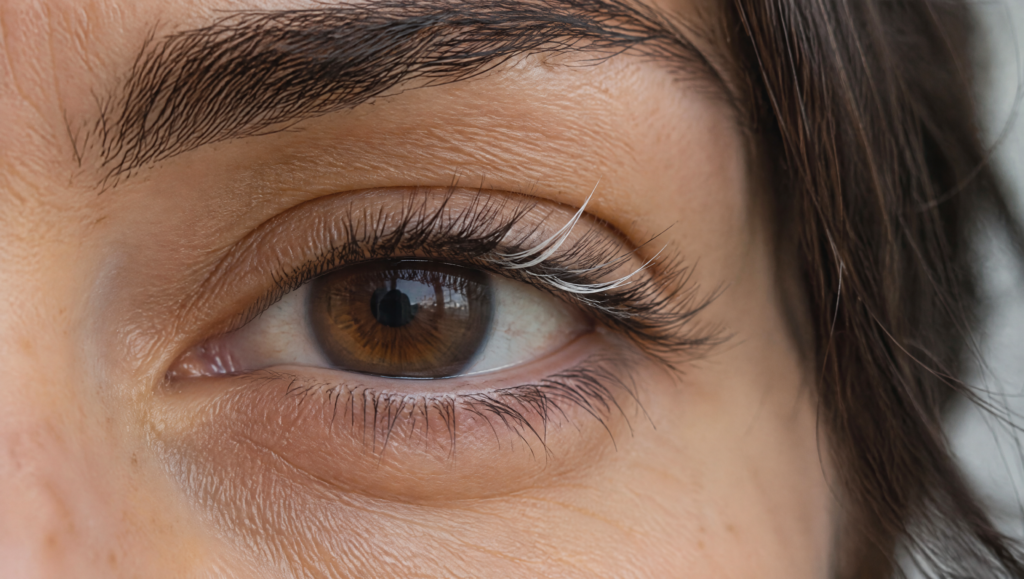
An eye-care text on poliosis notes that the picture varies. It can be as small as one or two white lashes or involve the entire edge of an eyelid. Often it appears in a patch, which is why one eye can have a pale stripe while the other looks normal.
Sometimes the skin under the white lashes looks normal. In other cases it is lighter than the surrounding skin, a feature DermNet describes as leukoderma. Neighboring eyebrow hairs or scalp hair can be affected too.
Poliosis is also not the same as ordinary lash graying. If you are older and many lashes are slowly lightening, that reflects the natural decline in pigment cells that affects hair everywhere. A distinct, well-defined white patch is what clinicians usually mean by poliosis.
What causes white eyelashes?
The honest answer is that the exact mechanism is unknown in many cases. A published ophthalmology reference states that the pathogenesis of poliosis is unknown or speculative in most cases and that the list of possible causes is long. The groups below are the ones commonly described.
Inherited conditions
Several genetic conditions include white patches of hair from birth or early life. A patient-education answer from the American Academy of Ophthalmology names Waardenburg syndrome and tuberous sclerosis as inherited conditions that can be linked to poliosis in a child. DermNet also lists piebaldism, a condition with congenital white patches of skin and hair. These are uncommon, and white lashes in an infant or young child are a reason for a pediatric or eye-care evaluation rather than a wait-and-see approach.
Autoimmune and inflammatory conditions
The immune system can attack pigment cells. Vitiligo, a loss of skin color in patches, can come with white eyelashes and eyebrows when the patch involves hair-bearing skin. DermNet shows examples of poliosis of the eyebrow and eyelashes in vitiligo and in alopecia areata, and notes that in alopecia areata the regrowing hairs can come back white at first.
A case report in the Korean Journal of Ophthalmology lists acquired lash poliosis in several eye-related conditions, including blepharitis, sarcoidosis, sympathetic ophthalmia, herpes zoster, Vogt-Koyanagi-Harada syndrome, vitiligo and tuberous sclerosis, as well as after radiation. Vogt-Koyanagi-Harada syndrome is a rare inflammatory disease that can involve the eyes, and a dermatology source notes that poliosis can appear in its later stages. This is why unexplained lash whitening that arrives with eye symptoms is taken seriously.
Eyelid inflammation
Chronic eyelid margin inflammation is one of the conditions on that ophthalmology list. If your lids are crusty, red or itchy and your lashes are thinning or changing, our guide to blepharitis and Demodex explains how lid inflammation can affect the lash line.
A mole near the lashes
The same Korean Journal of Ophthalmology report describes a 39-year-old man whose lashes on the central part of one lower lid turned white over a couple of weeks. Doctors found a small pigmented spot just above the white lashes, and removal and examination showed a benign halo nevus, a mole surrounded by a zone of pigment loss. The authors presented it as the first such case reported on the eyelid, so it is a rarity, but it illustrates why a one-sided patch is worth showing to a professional.
Medicines and treatments
Some drugs and treatments are associated with poliosis. A medical information site lists the antibiotic chloramphenicol and the cancer drug cetuximab as examples, and DermNet notes that medication-related poliosis can sometimes repigment. If you recently started a new medicine and see lash color change, mention it to the prescriber rather than stopping anything on your own. For related lash changes during cancer care, see our piece on eyelash loss during chemotherapy.
Thyroid and nutrition concerns
Popular health sites often list thyroid disorders and low vitamin B12 as possible contributors to white lashes. The evidence in this area is thinner than for the causes above, and a doctor can check with simple blood tests if the history suggests it. Thyroid disease is more typically known for changing lash density; our article on thyroid disease and lash loss covers that link.
Aging
Hair color depends on melanin, and the amount declines with age, so lashes can turn gray or white along with everything else. This is the most common reason overall and, on its own, is not a sign of disease.
Can lash tinting or other cosmetic procedures cause white lashes?
There is a small amount of published evidence on this. A 2025 case report in JAAD Case Reports described a patient who developed poliosis after a semipermanent eyelash tint. About two weeks after the incident the patient noticed loss of lash color, and at eight months roughly 80 percent of the lashes were depigmented. A single case cannot show how often this happens or prove cause in every person, and it should not be read as a reason to panic.
It is, however, one more reason to treat lash dye as a medical-grade decision rather than a casual beauty add-on. Our guide to eyelash tinting safety covers what the FDA says about dyeing lashes and who should skip it.
Is it related to lash serum?
This is a fair question, since the site covers lash serums at length. Reduced lash pigment is a different issue from the pigmentation changes that product labels describe for prostaglandin analogs such as bimatoprost, which involve darkening of the iris or eyelid skin. We explain that label language in our article on lash serum and eye color change. A product being used on the lashes is worth mentioning to the clinician who evaluates new lash changes, along with any other products or medicines, but white lashes should not be assumed to come from a serum without an exam.
Manufacturer statements about what a product does or does not cause are claims, and they are not a substitute for an assessment of your own eyes.
When should you see a doctor about white eyelashes?
Most single graying lashes in an older adult are harmless. Consider booking an eye exam or a dermatology visit if any of the following apply:
- The color change appeared quickly, over days to weeks.
- Only one eye or one section of a lid is affected.
- There is a mole, a bump or a skin change near the white lashes.
- You also have eye redness, pain, light sensitivity, blurred vision or flashing lights.
- Pale patches of skin are appearing on the face, hands or elsewhere.
- The lashes were white or pale from birth, or a child develops them.
- Lashes are falling out as well as changing color.
An eye-care professional can examine the lid margin and eye under magnification, and a dermatologist can look at related skin and hair changes. The right test, if any, depends on the findings.
Can white eyelashes regain their color?
It depends on the cause, and in many cases the answer is unclear. DermNet notes that poliosis may stay stable, but hairs can repigment in some situations, such as alopecia areata and medication-induced cases. A reference on eyelid vitiligo from a vision-care site says that lashes are often more resistant to treatment than the skin and may stay white even when the skin recovers, though that is general commentary and not a promise about any individual.
The ophthalmology text quoted earlier states that there is no specific treatment for poliosis and that care is directed at cosmetic improvement, for example with hair dye. If a medical cause is found, treating it is the first step, and color may or may not follow.
What are the safe ways to cover white lashes?
Because the eye area is delicate, the safest choices are the simplest ones.
- Everyday mascara. A regular mascara in black or brown can cover pale lashes. Replace it on schedule and stop if your eyes become irritated.
- Brow and lash pencils. A soft pencil dabbed lightly on the lash base can fill in a pale stretch without touching the lash line heavily.
- Avoid dyeing at home. Hair dye is not made for eyelids, and the lash area is exactly where an allergic or chemical reaction can hurt your eyes. If you want a longer-lasting option, ask your doctor first and see the tinting article above.
- Gentle removal. Take off eye makeup with a mild remover and no tugging, since stressed lashes may break. Our guide to eyelash loss has more on protecting fragile lashes.
It also helps to remember that lash health is normally a slow cycle. Individual lashes grow, rest and shed over months, as explained in our article on the eyelash growth cycle, so any change in color or length is something to observe over time with a clinician rather than judge from one day’s mirror.
Frequently Asked Questions
Why are some of my eyelashes turning white?
Poliosis means reduced melanin in a patch of hair. Aging is the most common explanation for a few pale lashes, but inherited conditions, autoimmune conditions such as vitiligo or alopecia areata, eyelid inflammation, a nearby mole, some medicines and rare cosmetic reactions have all been described. A clinician can work out which applies.
Are white eyelashes a sign of a serious illness?
Often not. Sources describe the cause as unknown in many cases. Still, because poliosis can accompany certain autoimmune and eye conditions, a sudden or one-sided change, or white lashes with eye symptoms, is worth a professional check.
Will my white eyelashes turn black again?
Sometimes, but not reliably. Repigmentation has been described in cases linked to alopecia areata and to some medicines, while lashes affected by vitiligo are often stubborn. Your doctor can tell you what is likely for your situation.
Can stress turn eyelashes white?
Many sites say so, but the link between stress and graying is not fully understood, and researchers are still studying it. It is better to look for a medical cause than assume stress.
Can I dye my white eyelashes?
Doing it yourself with ordinary hair dye is not advised, because dye near the eye can cause allergic reactions and injury. Regular mascara is the gentler first choice, and any dye or salon tint should be discussed with an eye-care professional.
Should I pull out a white eyelash?
Plucking is not recommended. It can irritate the lid, and a lash that is pulled may grow back in a similar color anyway. If a single white lash bothers you, trimming or covering it with mascara is gentler.
A note on professional care
This article is for general education and is not medical advice. If you have an eye or eyelid concern, including a sudden change in lash color, please talk to a licensed clinician such as an ophthalmologist, optometrist or dermatologist.
Sources
- DermNet: Poliosis
- DermNet (professional): Poliosis
- Korean Journal of Ophthalmology (2010): Poliosis of eyelashes as an unusual sign of a halo nevus
- JAAD Case Reports (2025): Poliosis as a result of temporary eyelash tinting
- American Academy of Ophthalmology: Should I be worried about my daughter’s white eyelashes?
- Ento Key: Poliosis (ophthalmology text excerpt)
- MedicineNet: Is poliosis rare?
- Healthline: White eyelashes