How to Remove Eyelash Extensions Safely: When to Do It at Home and When to See a Pro
At some point, almost everyone who wears lash extensions asks the same thing: can I just take these off myself? Maybe the set looks sparse, the next appointment is weeks away, or your eyes feel irritated and you want the glue gone now. The honest answer is that it is possible to loosen extensions at home, but it is slower and riskier than it looks, and there is one mistake that causes most of the damage: pulling.
This guide walks through what eye-care groups and lash professionals say about removal, how the glue and your natural lash cycle affect the process, which at-home methods people describe, and the situations where you should skip the DIY route entirely. It is general information, not a substitute for an exam.
One point of context before the details. Extensions are bonded to your own lashes one at a time, so removing them is really a question of how to separate a fibre from a living hair without hurting the hair or the eyelid skin around it. Everything below follows from that.
Eye doctors have been fairly consistent about the main danger. The American Academy of Ophthalmology notes that rubbing, tugging or pulling on lashes can fracture natural lashes and may even damage the follicle itself. That is the reason nearly every method below is about softening the bond and waiting, not forcing it.
Key Takeaways
- Never pull or pick at extensions. Pulling can break or uproot the natural lash underneath.
- A licensed technician with a dedicated remover is the lowest-risk option, according to lash professionals and eye-care groups.
- If you remove them yourself, the goal is to weaken the adhesive gradually, which can take days rather than minutes.
- Skip DIY removal if you have eyelid inflammation, a history of eye infections, an allergic reaction, or pain.
- After removal, give your lashes a rest and keep the lid area clean and gentle.
- See an eye doctor for swelling, discharge, pain, light sensitivity or vision changes.
Why is removing lash extensions trickier than taking off falsies?
Strip lashes sit on top of the lash line on a thin band of glue, and they peel off in one piece. Classic extensions are different. Each synthetic fibre is attached to a single natural lash, and volume sets attach a small fan of fibres to one natural lash.
The adhesive is usually a cyanoacrylate-based glue, the same chemical family as many household instant glues. Once it cures, it is designed to hold through washing, sleeping and sweating. EyeWiki, the American Academy of Ophthalmology’s clinical wiki, notes that the glue can take up to six hours to set fully, which is why technicians tell you to keep the area dry after an appointment.
Because the bond is strong, tugging on a fibre transfers the force to the natural lash. Lash professionals quoted in beauty-press interviews say this can pull out natural lashes and leave gaps, and one salon founder described bald spots that may not fill in again. Those are professional observations rather than controlled studies, but they match the eye-care guidance on tugging.
What happens to extensions on their own over time?
Your natural lashes follow a cycle of growth, rest and shedding, and an extension falls out when the lash it is attached to sheds. Optometry sources in Canada describe extensions as lasting roughly one to two months for this reason. One lash professional quoted by Bustle put the average at around four natural lashes shed per day.
That is useful to know for two reasons. First, if you simply stop booking fills, your set will thin out by itself over several weeks. Second, lashes that are already in their shedding phase will come off with the fibre attached, which is normal and not a sign that you have damaged anything. If you want to understand the timing better, our guide to the eyelash growth cycle explains the stages in plain language.
Is it better to see a technician or remove them yourself?
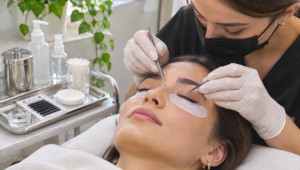
For most people, a professional removal is the safer choice. A technician can use a gel or cream remover designed for lash adhesive, isolate each lash with tweezers, and stop if your eye is watering or the skin looks irritated. One Canadian spa founder told Yahoo Life that only a salon-grade adhesive remover can take a full set off in one go without harming natural lashes, while at-home methods should be expected to work slowly.
Professional removal is also worth choosing when:
- The set is dense, layered or was applied recently.
- Your eyelids are red, itchy, swollen or crusty.
- You suspect an allergy to the adhesive.
- You have trouble keeping your eyes still, or you have limited vision and cannot see what you are doing.
If the reason you want them off is irritation, it is worth reading about adhesive allergy signs first, because removing the extensions yourself near an inflamed eye can make things worse.
What are the common at-home methods, and how well supported are they?
There is no official clinical protocol for DIY removal. What exists is advice from lash technicians, repeated across beauty articles. Treat it as practical guidance from people who do this for a living, not as tested medical treatment.
Steam and warm water
Warmth and humidity soften the adhesive bond, which is why extensions often loosen faster when you sweat or get them wet often. Some technicians suggest a warm steamy shower or a warm compress held near, not on, the closed eye. This is the gentlest approach and the least likely to cause irritation, but on its own it rarely removes a full set.
Oil-based softening
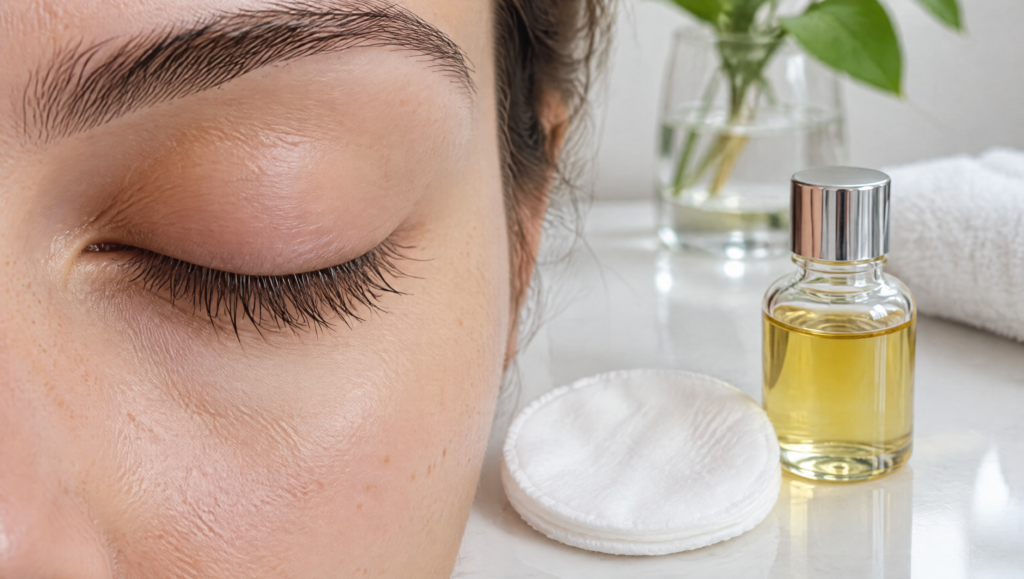
The method most often described by lash professionals is saturating the lashes with a lightweight oil and letting it sit so the glue loosens. One professional interviewed by Bustle called oil the safest at-home option. Commonly mentioned choices include fragrance-free baby oil or jojoba oil, while some technicians say olive oil works less effectively.
If you try it, keep these cautions in mind:
- Keep your eyes closed, and keep oil away from the eye surface. Oil that gets into the eye can blur vision and irritate.
- Use a clean cotton pad or a fresh cotton swab each time, never a reused one.
- Avoid heavy petroleum-based products that are hard to rinse off the lash line.
- Do not use products labelled for the face or body if you are unsure about fragrance or additives.
Gentle sliding, not pulling
After the adhesive has had time to soften, some guides describe sliding a fibre gently down and away with a clean cotton swab. The key is that it should release with almost no effort. If you feel any tug on the lash or the skin, stop. Waiting a day and trying again is better than forcing it.
Mascara and “hacks” to avoid
Some articles suggest wearing mascara or picking at the base with tweezers. Eye-care groups would not recommend sharp tools or repeated rubbing near the eye, and mascara can add its own contamination risk. If a method involves scissors, tweezers pointed at the lid, or acetone-based nail products, treat it as a hard no.
How long does at-home removal take?
Expect it to take days rather than a single sitting. A consumer health article that cites a lash technician describes loosening the adhesive over a few days, with repeat treatment each day. Lash professionals also generally say you should not expect every extension to come off in one session at home, and that trying to remove all of them at once is where people get into trouble.
A realistic expectation is that a few fibres will release each time and the rest will fall out as your natural lashes shed. If a method is not working after a few attempts, a technician’s remover will usually be faster and gentler than escalating at home.
What should you avoid doing?
- Pulling, peeling or picking. This is the main cause of lash loss during removal, according to eye-care and professional sources.
- Rubbing your eyes. The AAO notes that, although rare, fibres can end up under eye tissue and may need to be removed surgically.
- Using scissors or sharp tweezers near the lid. The risk to the eye is much higher than any benefit.
- Using strong solvents. Nail polish remover and similar products are not made for the eye area.
- Removing a full set in one go. Rushing raises the chance of breaking natural lashes.
Who should not remove extensions at home?
Eye-care sources suggest being extra cautious if you have chronic eyelid inflammation, dermatitis, or a history of corneal problems. An ophthalmologist at the University of Miami’s Bascom Palmer Eye Institute advised that people with chronic blepharitis or corneal issues should talk to an eye-care professional before wearing extensions at all. If you are dealing with crusty lids, our overview of blepharitis and lash loss explains how eyelid inflammation can look and why an exam matters.
Put professional help first, too, if you are pregnant and unsure which products are suitable, if you have had an eye infection recently, or if your lids are sore after your last set. In any of these cases, a licensed technician or your eye doctor can decide what is safest.
What should you do right after the extensions come off?
Once the fibres are gone, your lash line may have leftover adhesive residue and your natural lashes may look thinner than you remember. That is common, because the extensions covered the natural lashes and some were shedding underneath. A few steps help the area recover.
- Cleanse gently. Use a mild, eye-safe cleanser or a lash cleanser applied with a soft cotton pad. Our notes on gentle makeup removal cover technique that works well here.
- Skip heavy makeup for a few days. Give the lids a chance to calm down.
- Go easy on curlers. Natural lashes that have been under extensions are more fragile.
- Consider a break. A Utah eye-care article suggests taking breaks between sets to reduce strain on the follicles.
For a broader recovery plan, our piece on lashes after extensions covers what to expect over the following weeks, and the guide to how to regrow lost eyelashes explains why patience is the main ingredient.
Do natural lashes look thinner after extensions?
They can look sparser for a while, particularly if heavy or long fibres were used. The Canadian optometry sources note that the extra weight of extensions can contribute to temporary or permanent lash loss, a condition called madarosis. That does not mean every wearer will lose lashes, but it is a reason to ask your technician about lighter weights and to avoid layering a heavy set over fragile lashes.
Gaps that remain after several months, or lashes that stop growing in certain areas, are worth showing to a doctor. Scarring, inflammation and other conditions can look similar to simple breakage.
Can you use a lash serum after removal?
People often ask whether they should start a lash serum as soon as the set is off. That is a question for you and a clinician, particularly because some serums contain prescription-strength ingredients and some products on the market are not what the label suggests. Our comparison of lash serum versus extensions covers the differences, and any product used near the eye should be checked against its label and your doctor’s advice. Nothing here promises regrowth, and results vary from person to person.
When should you see an eye doctor?
Book a prompt appointment if you notice any of the following during or after removal:
- Persistent redness, swelling or discharge from the eye or eyelid.
- Pain, a gritty or foreign-body feeling, or sensitivity to light.
- Blurred vision that does not clear.
- Itching and swelling that spreads, which can suggest an allergic reaction.
- A fibre or fragment that seems stuck under the lid.
EyeWiki notes that symptoms of a reaction to extensions may not appear until hours or days after application, so do not assume a problem is unrelated just because it started later. If you are not sure, an eye exam is a reasonable step.
This article is for general information only and is not medical advice. Please talk to a licensed clinician, such as an ophthalmologist or optometrist, about any eye or eyelid concern, and ask a licensed technician about removal if you are unsure.
FAQs
Can I pull off eyelash extensions if they are already loose?
It is better not to. Even loose fibres can still be attached to a lash that has not yet shed. Let them fall out, or soften them first and wait until they release without resistance.
Will my natural lashes grow back if some come out?
Lashes shed and regrow as part of their normal cycle, and many people see natural lashes return over time. Lash professionals warn that repeated forceful removal can cause long-lasting gaps in some cases, which is why gentle handling matters.
Is oil safe to use near my eyes?
Lash technicians commonly suggest lightweight oils applied with the eyes closed, but this is professional advice, not an eye-care guideline. Oil that gets into the eye can cause blurring and irritation, and some people react to specific oils or fragrances. If you have sensitive eyes or lid inflammation, avoid trying it.
How long should I wait between sets?
There is no official number. Some eye-care sources suggest breaks between sets to reduce strain on follicles, and a technician can advise based on how your natural lashes look.
Are magnetic lashes an easier alternative?
They avoid glue, but they come with their own concerns, such as breakage and pressure on the lash line. We cover those in our post on magnetic eyelash safety.
What if my extensions were put on by an unlicensed person?
Ask a licensed professional or your eye doctor to remove them, especially if you do not know what adhesive was used. Extensions and their glue are not regulated by the US Food and Drug Administration in the way medicines are, so knowing the ingredients matters. Our extension safety checklist lists questions to ask before your next set.
Sources
- American Academy of Ophthalmology, “Eyelash Extension Facts and Safety” (aao.org, Eye Health)
- American Academy of Ophthalmology, EyeWiki, “Eyelash Extensions” (eyewiki.aao.org)
- Ontario Association of Optometrists, “Eyelash Extensions” (opto.ca, last updated March 12, 2023)
- Bustle, “The Safest Way To Remove Eyelash Extensions At Home” (lash professionals interviewed)
- Yahoo Life, “How to Remove Your Eyelash Extensions at Home, According to Experts”
- University of Miami Health System, “The Health Risks of Eyelash Extensions” (Bascom Palmer Eye Institute)
- University of Utah Health, “Are Eyelash Extensions Safe?”