Lash Serum, Extensions and Dry Eye: What the Label and Small Studies Actually Show
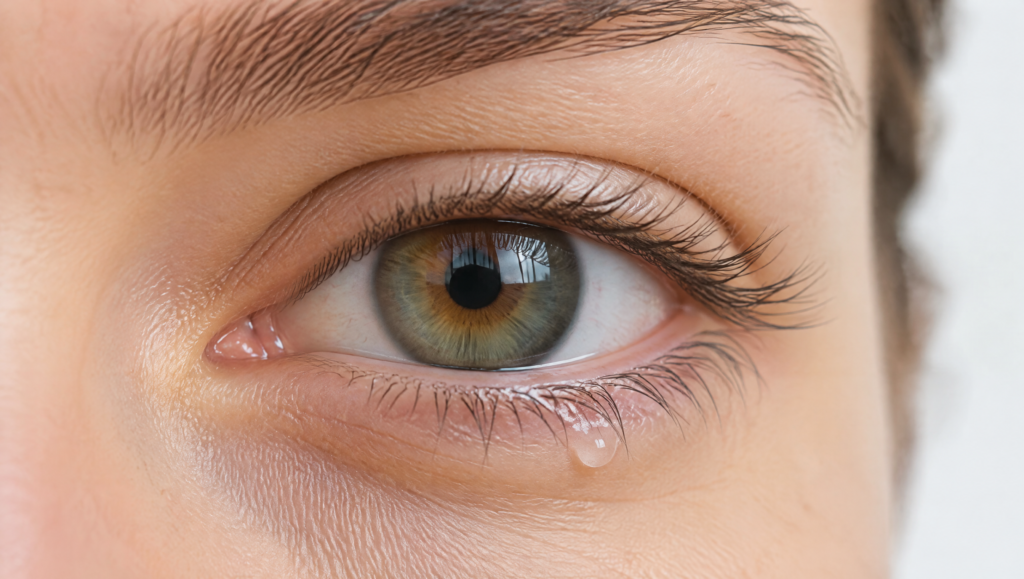
You put on a lash product to feel put together, and by lunchtime your eyes feel sandy. Is it the serum, the extensions, the mascara, or the screen you have been staring at since breakfast? Dry, gritty, tired eyes have many possible causes, and lash products are only one of them.
This guide separates what is documented from what is only suspected. It covers what the US prescribing information for bimatoprost lists, what small studies of lash extensions found, how the oil glands in your eyelids fit in, and which habits help. It is general information, not a diagnosis.
One theme runs through all of it: when eyes feel dry, the product you started most recently is an easy suspect, but it is rarely the only one worth checking.
Key Takeaways
- Dry eye means the eye does not make tears properly, or tears evaporate too quickly. Eyelid oil glands help prevent that evaporation.
- The US prescribing information for Latisse (bimatoprost 0.03%) lists dry eye symptoms among its most frequently reported adverse reactions, each in under 4% of patients in the main trial.
- One small, uncontrolled study of Latisse over two months found no change in tear break-up time or tear osmolarity, though some participants stopped because of burning on instillation.
- Two small 2024 studies suggest lash extensions can disturb the tear film, at least for a while. Neither proves that extensions cause long-term dry eye.
- Screens, contact lenses, hormonal changes, allergies and eyelid inflammation are all common causes that look the same as product-related dryness.
- Pain, light sensitivity, changes in vision or discharge deserve a prompt visit to a licensed eye-care professional.
What is dry eye, and why do the eyelids matter?
Dry eye occurs when the eye does not produce tears properly, or when tears evaporate too quickly. The National Eye Institute’s page of dry eye symptoms and care tips describes how common it is, with an estimated 16.4 million Americans affected, and notes that long hours on a computer, tablet or phone can contribute.
Tears are not just water. The film over your eye has an oily top layer, a watery middle and a mucus layer underneath. The oil comes from the meibomian glands, which sit along the edges of your eyelids and open right at the lash line. When those glands do not work well, tears evaporate faster. A review of the research describes meibomian gland dysfunction as a major cause of evaporative dry eye, and cites estimates that it affects roughly 39 to 50 percent of the US population, rising with age.
That is why the lash line gets so much attention. Anything that irritates, crowds or contaminates the lid margin is a reasonable thing to ask about. “Reasonable to ask about” is not the same as “proven culprit,” and the rest of this article tries to keep that line clear.
Can lash serum cause dry eye?
What the prescribing information says
Bimatoprost 0.03% is a prescription drug in the US, sold as Latisse and as FDA-approved generics. Its prescribing information reports that the most frequently reported adverse reactions in the clinical trial were eye itching, redness of the eye surface, skin darkening, ocular irritation, dry eye symptoms and redness around the eye, each occurring in fewer than 4 percent of patients. The trial enrolled 278 adults and ran four months.
Labeling for the glaucoma-drop version of the same drug also lists ocular dryness among reported reactions. For a fuller breakdown of what the label reports, see our guide to bimatoprost side effects.
Two things follow from those numbers. First, dryness is a recognized possibility rather than a rare surprise. Second, most people in the trial did not report it. Both statements are true at once.
What a small ocular-surface study found
A study published in an Australian optometry journal asked a narrower question: what does Latisse do to the surface of the eye over two months? It followed young women without dry eye who wanted longer lashes. Twenty-eight started, fifteen finished, five stopped because of burning when the solution went on, and eight were lost to follow-up.
Among those who completed it, lash length increased, and the researchers saw no difference in non-invasive tear break-up time or tear osmolarity. The authors concluded that people considering lash enhancement should be told about possible discomfort on application. The study was open-label, uncontrolled and short, so it cannot rule out dryness in other people or over longer use.
What none of this tells you
Those findings concern a specific prescription product used as directed. Many products sold as cosmetic lash serums have different ingredients, and their labels may reveal little. If a serum makes your eyes sting or feel dry, our overview of lash serum irritation walks through the usual suspects.
The bimatoprost label also contains practical instructions that matter for comfort. It says contact lenses should be removed before application and can go back in 15 minutes later, a point we explain in the post on lash serum and contact lenses. It also says each sterile applicator is for one eye only, and that any excess should be blotted from the lid margin so it does not run onto the cheek.
Can lash extensions make eyes feel dry?
This is where the newest research sits. Two prospective studies from 2024 looked at the ocular surface in people with extensions, and they point in a similar direction without settling the question.
The Wenzhou study
Researchers in China followed 32 participants who received extensions on both eyes, measuring the eye surface at baseline, one hour, one day, one week and one month. An hour after the appointment, 27 participants reported symptoms, most often a foreign-body sensation. Tear break-up time was at its lowest at one week. Questionnaire scores did not differ significantly across the time points, and measures such as lipid layer thickness and gland appearance did not change significantly. The authors concluded that extensions can unbalance the ocular surface, causing corneal surface defects and a short-term drop in tear film stability.
The Bulgarian removal study
A second group recruited 34 women, average age 28, who already had dry eye complaints and planned to have their extensions removed. Four weeks after removal, their dry eye questionnaire score improved from 33.4 to 26.7, average tear break-up time rose from 11.25 to 13.96 seconds, blinking increased by about two per minute, and surface staining dropped by one grade. The authors concluded that removal improved symptoms and signs.
Read that carefully. It followed people who were already symptomatic and chose removal, and it was small. It cannot tell you how many extension wearers would see the same change. Scores also improved without returning to normal.
Why might extensions matter?
The Bulgarian authors list possibilities rather than proven mechanisms: reduced or incomplete blinking, incomplete eyelid closure during sleep, blocked glands, trapped dust, allergic reactions and mechanical effects. Allergy to the adhesive is a separate and better-documented problem, covered in our post on adhesive allergy and its signs.
What about mascara and eye makeup?
I did not find a good controlled study that isolates mascara as a cause of dry eye, so it would be wrong to claim one. What eye-health groups do emphasize is hygiene: old or shared products can carry bacteria, which is an infection question rather than a dryness one. Our guide on when to replace mascara covers the three-month rule and what the evidence behind it looks like.
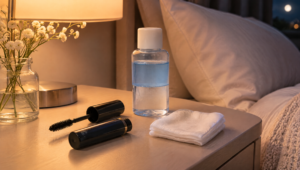
Leftover makeup along the lash line is also worth taking seriously, because that is where the oil glands open. Gentle habits for removing eye makeup are a low-risk place to start if your lids feel clogged or crusty.
Is it really the lash product? Other common causes
Dry eye is often multifactorial, so it helps to check the rest of the list before blaming one product.
- Screens and reading. Infrequent blinking during close work is a recognized contributor, according to the National Eye Institute.
- Contact lenses. Long-term wear can reduce corneal sensation and contribute to dryness.
- Hormonal changes. Dry eye is more common after menopause, and hormone therapy has also been associated with it. If thinning lashes are part of your story too, see menopause and thinning eyelashes.
- Eyelid inflammation. Meibomian gland dysfunction often occurs with blepharitis, which causes red lids and crusting at the lash base. Its symptoms are nearly the same as dry eye, so only an eye doctor can tell them apart. Our explainer on blepharitis and Demodex has more.
- Allergies and medications. Allergies can be associated with dry eye, and some medicines list it as a side effect.
- Environment. Smoke, wind, air conditioning and dry indoor heating can all make eyes feel worse.
A simple self-check to bring to your appointment
These questions do not diagnose anything, but your answers can make a visit more useful.
- Did the dryness start within days or weeks of a new serum, a new set of extensions or a new makeup product?
- Does it feel worse at the end of a screen-heavy day, regardless of products?
- Is one eye worse than the other? (A one-sided problem raises different questions.)
- Are there crusts, flakes or sticky debris at the base of your lashes in the morning?
- Do you wear contact lenses, and do they feel less comfortable than they used to?
- Have your symptoms changed since a change in hormones, medication or health?
What can you do about it?
None of these steps replaces advice from a clinician who has examined your eyes, but they are common, low-risk starting points drawn from patient-education sources.
- Pause the newest product. If the timing lines up, stepping back from a new cosmetic serum or a fresh set of extensions can help you work out whether it is involved. For a prescription product, ask your prescriber before stopping.
- Take blink breaks. Harvard Health suggests regular breaks from screens and close work to avoid the reduced blinking that worsens symptoms.
- Add moisture to the air. A humidifier indoors, and avoiding smoke, wind and direct air vents, are standard suggestions.
- Ask about warm compresses and lid massage. Patient guides recommend checking with your provider on how to do these properly.
- Check before using drops. Harvard Health advises consulting a doctor before starting over-the-counter artificial tears. Ask which type suits you and how to time them around any lash product.
- Be consistent with hygiene. Clean applicators, no sharing, and replacing eye makeup on schedule all lower avoidable irritation.
When should you see an eye doctor?
Dry eye symptoms that last more than a few days are worth mentioning to a professional. Sooner is better if you have:
- Eye pain or a feeling that something is stuck in the eye that does not clear
- Marked redness, swelling or discharge
- Sensitivity to light or changes in vision
- A tender lump on the lid, which may be a stye or chalazion
- Symptoms after eye surgery or with a history of glaucoma
Please talk to a licensed clinician about any eye or eyelid concern. This article is educational and does not replace an examination.
Frequently asked questions
Can lash serum cause dry eyes?
It can be a recognized possibility. The US prescribing information for bimatoprost lists dry eye symptoms among frequently reported reactions, each under 4 percent of patients in the trial. A small study of Latisse found no change in tear break-up time or osmolarity over two months, but it was uncontrolled and tiny. Cosmetic serums vary, so check ingredient lists and stop if your eyes become uncomfortable.
Do lash extensions cause dry eye?
Two small 2024 studies found short-term changes in tear film stability and symptoms in people with extensions, and one found improvement after removal. Neither shows that extensions cause lasting dry eye in everyone. If you are symptomatic, tell your lash technician and an eye doctor.
Should I stop my lash serum if my eyes feel dry?
If it is a prescription product, call the prescriber before deciding. For a cosmetic serum, pausing it while you sort out the cause is a reasonable step, and a clinician can help judge whether the product is involved or whether something else, such as lid inflammation, is going on.
Is dry eye the same as blepharitis or meibomian gland dysfunction?
No, though they overlap. Blepharitis is eyelid inflammation. Meibomian gland dysfunction is a problem with the oil glands. Both can cause or worsen dry eye, and their symptoms are similar, so an eye exam is the way to tell them apart.
How long does it take to feel better after removing extensions?
In the Bulgarian study, measurements improved at four weeks, but scores had not returned to normal. Individual timelines will vary, and a persistent problem needs an exam rather than waiting.
Can I wear contact lenses with a lash serum?
The bimatoprost label says to remove lenses first and wait 15 minutes before putting them back. If your lenses feel uncomfortable or dry, ask your eye doctor about your routine.
Sources
- National Eye Institute (NIH), “Dry Eye,” eye health information page, last updated August 2025.
- Latisse (bimatoprost ophthalmic solution) 0.03% US prescribing information, AbbVie/Allergan, including sections 5 and 6; label text as republished by Drugs.com and RxList.
- Jester JV, Parfitt GJ, Brown DJ, “Meibomian gland dysfunction: hyperkeratinization or atrophy?” BMC Ophthalmology, 2015.
- “Effects of LATISSE (bimatoprost 0.03 per cent topical solution) on the ocular surface,” Clinical and Experimental Optometry, 2017 (abstract).
- Han J et al., “The effects of eyelash extensions on the ocular surface,” Contact Lens and Anterior Eye, 2024.
- Grupcheva CN et al., “Beauty versus Health: How Eyelash Extensions May Affect Dry Eye Disease?” Journal of Clinical Medicine, 2024.
- All About Vision, “Meibomian gland dysfunction,” medically reviewed overview.
- Harvard Health Publishing, “Dry eye syndrome,” A to Z entry.