Eyelid Dermatitis: Why the Skin Around Your Lashes Gets Itchy, Red and Flaky
If the skin around your lashes keeps turning red, dry or itchy, you are dealing with something far more common than most people realise. Doctors call it eyelid dermatitis, and it covers a group of inflammatory skin conditions that show up on one of the thinnest patches of skin on the body.
It is also easy to confuse with other lash-line problems. Crusty lashes, puffy lids and flaking can come from an allergy, an irritant, eczema or lid inflammation, and the right fix depends on which one it is. This guide walks through what eyelid dermatitis looks like, what commonly sets it off, and what dermatology and eye-care sources suggest doing about it.
It is written for general education. It does not replace an exam, and eye or eyelid symptoms deserve a proper look from a licensed clinician.
Key Takeaways
- Eyelid dermatitis is an umbrella term for inflamed, itchy, scaly or swollen eyelid skin, and it has several different causes.
- Eyelid skin is thin and reacts to triggers that your other skin may tolerate, so a product can bother your lids and nothing else.
- Allergic contact dermatitis is a leading cause, and the trigger is often not something you put on your eyes directly. Nail products, hair products and hand transfer all count.
- Common culprits named by dermatology sources include fragrances, preservatives, nickel in tools, and lash adhesives.
- Patch testing by a dermatologist is how an allergic trigger is confirmed.
- Lid redness with swelling, pain, vision changes or light sensitivity needs prompt medical attention, not home experiments.
What is eyelid dermatitis?
Eyelid dermatitis is inflammation of the skin of the upper and lower lids. DermNet, a dermatology reference, describes eyelid contact dermatitis as an inflammatory reaction caused by contact with a trigger substance, and notes that the same trigger may not cause a rash anywhere else on the body.
The reason is anatomy. Eye-care educators point out that the eyelid has a very thin outer layer of skin, little fat and plenty of blood vessels, which makes it more reactive to allergens and irritants than skin elsewhere. A shampoo, for instance, can inflame the lids while the scalp stays calm.
For many people the first sign is simple: lids that feel tight, itchy or sore, with dry patches along the lash line. Over time the skin can look darker, thicker or scaly. Patient groups publish helpful lists of common eyelid eczema triggers if you want a second overview.
What does eyelid dermatitis look like?
Symptoms vary a little by cause, but sources commonly list the following:
- Itching, which is often the headline symptom
- Redness and swelling of one or both lids
- Dry, flaky or scaly skin
- Watery eyes or a sense of stinging
- Crusting along the lash line in some forms
- Soreness or tenderness when the skin cracks
A 2024 review in the dermatology journal Cutis notes that persistent, untreated eyelid dermatitis can in some cases lead to lash loss, damage to the oil glands of the lid, and skin darkening. That is one reason lingering symptoms are worth getting checked rather than ignored.
What are the main types?
Clinicians usually sort eyelid dermatitis into a few buckets. Knowing them helps you ask better questions at an appointment.
Allergic contact dermatitis
This is a delayed allergic reaction to a substance the skin touched. Dermatology literature describes it as one of the most commonly reported causes of eyelid dermatitis. Symptoms may take a day or two to appear after exposure, which makes the culprit harder to spot.
Irritant contact dermatitis
Here nothing is allergic. A substance simply damages the skin barrier. Rubbing the eyes, very dry or cold air, harsh cleansers and frequent wiping can all do it. Healthline lists scratching and rubbing among the irritant triggers.
Atopic dermatitis (eczema)
People with a personal or family history of eczema, hay fever or asthma may find that their eyelids flare during eczema periods. The National Eczema Association notes that genetics and a history of atopic dermatitis or allergies can play a role.
Seborrheic dermatitis
This is a flaky, sometimes greasy form that favours oily areas of skin, including the lids and brow area. It can overlap with lid-margin inflammation, so a clinician may need to separate the two. If your lashes are also crusty or thinning, our guide on lid inflammation and lash loss covers the look-alike condition in more detail.
What commonly triggers eyelid dermatitis?
This is where eyelid dermatitis gets interesting, because the trigger is often not obvious. Dermatology sources stress that many eyelid reactions come from exposures that never touch the eye directly.
Cosmetics and skincare
Makeup, makeup removers, eye creams, moisturisers, sunscreens and cleansers are all listed by DermNet as possible sources of allergens. Fragrances and essential oils come up repeatedly, and the National Eczema Association advises people with eyelid eczema to avoid products containing essential oils, which it describes as potent allergens and irritants for sensitive lid skin.
Preservatives
Preservatives appear in many cosmetics and also in eye drops and contact lens solutions. They are named in several dermatology sources as recurring allergens. If your lids flare after you start a new drop or solution, mention it to your doctor.
Nickel and other metals
Metal allergy is a frequent finding in eyelid cases. The Cutis review cites a large patch-testing analysis of 2,332 people with eyelid dermatitis, in which about 18.6 percent of those with allergic eyelid dermatitis had a clinically relevant nickel allergy. Possible sources include jewellery, tweezers, makeup applicators and eyelash curlers.
Lash adhesives and false lashes
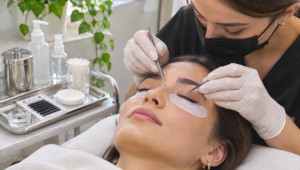
DermNet lists false eyelashes, and more often their adhesives, as potential allergens, and the National Eczema Association names lash adhesives among eyelid eczema triggers. If your flare started after a salon visit, see our article on lash extension glue allergy.
Lash and brow dyes
Hair dyes can contain allergens that affect the face. The Cutis review mentions paraphenylenediamine in hair dyes as a common allergen in one cohort. For what regulators and case reports say about dye used near the eyes, read our piece on lash tinting safety.
Transfer from your hands
This one surprises people. Substances can reach the lids when you rub or touch your face. Nail polish and nail products are a classic example, and hair products and shampoo residue can behave the same way. Eye-care educators advise that when you suspect an allergy, you should not limit the suspects to products that touch the eyes, because most periocular allergens come from elsewhere.
Airborne allergens
Dust mites and pollen can also trigger lid dermatitis, which may explain flares that follow the seasons.
Could my lash serum be the cause?
Any product used close to the lid margin can irritate or sensitise skin in a susceptible person, and lash serums are no exception. Mild irritation and a true allergy are different things, though, and the label of the specific product matters. Our article on lash serum irritation explains how to tell the two apart in general terms.
If you think a product is behind your symptoms, stop using it and speak with a clinician. For prescription products, do not restart without medical advice.
How is eyelid dermatitis diagnosed?
A clinician starts with your history: when it began, what changed in your routine, your work, your hobbies and any history of eczema or allergy. Then they examine the lids and nearby skin. If an allergy is suspected, patch testing is the standard method. DermNet and the Cutis review both describe allergic contact dermatitis as confirmed with patch tests.
A skin biopsy is occasionally used if the cause stays unclear, according to the National Eczema Association. Eye doctors may also check the lid margins and tear film to rule out blepharitis or other eye conditions.
What helps? Practical steps sources describe
Treatment depends on the cause, and a clinician should guide it. Still, several principles appear across the sources reviewed for this article.
- Stop the suspected trigger. The National Eczema Association advises identifying and stopping products that irritate the lids as soon as possible.
- Pause eye cosmetics while the skin is inflamed. DermNet suggests avoiding eyelid cosmetics while dermatitis is active.
- Keep cleansing simple. DermNet suggests plain water or a cream cleanser made for sensitive skin.
- Choose fragrance-free, hypoallergenic products. Look for short ingredient lists, and be wary of essential oils.
- Do not rub or scratch. Rubbing keeps the cycle going and can bring bacteria to broken skin.
- Be careful with over-the-counter creams. Healthline cautions that some contain fragrance or preservatives that may themselves cause a reaction.
- Let a clinician choose any medicated treatment. The skin of the lid is delicate, and eye-care educators note that long-term steroid use near the eye carries its own risks, so treatment is usually selective and time-limited.
Allergen avoidance is the long game. DermNet notes that once patch testing identifies an allergen, avoiding it is necessary over the long term.
How do I protect my lids day to day?
Review your routine in layers
Write down everything that touches your face, hair and hands: makeup, removers, skincare, sunscreen, shampoo, nail products and eye drops. Change one thing at a time so you can see what matters. Sudden multi-product overhauls make it harder to learn anything.
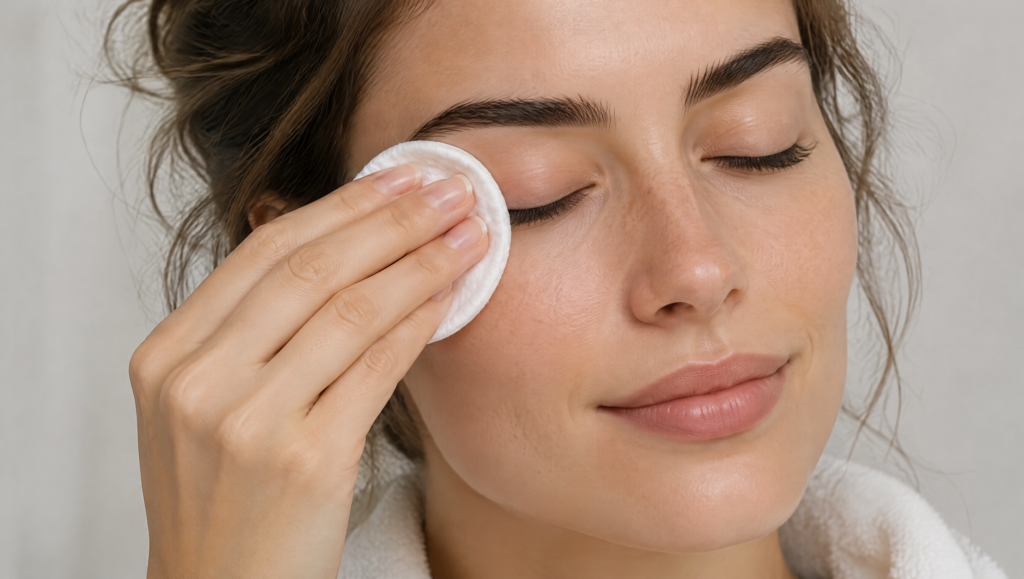
Be gentle when removing makeup
Aggressive wiping is an irritant in itself. Our guide to safe makeup removal covers softer habits for the lash line.
Mind the mascara and hygiene
Old or shared eye products can irritate and, in some cases, carry germs. Eye-health groups suggest replacing mascara about every three months, and we explain the reasoning in our mascara replacement guide.
Check your tools
If nickel is a suspect, ask your dermatologist whether your curler, tweezers or glasses frames could be involved before you throw everything away. Testing can save you guesswork.
Is it dermatitis, a stye or an infection?
Not every red lid is dermatitis. A tender, localised bump may be a stye or chalazion, and a red, watery, sticky eye may be conjunctivitis. Dermatitis tends to involve widespread itching and scaling of the lid skin itself.
If you are unsure, the comparison in our stye versus chalazion guide can help you describe what you see, though it cannot diagnose it. Clinicians sometimes find more than one problem at once, which is another reason to get an exam.
When should I see a doctor?
Book an appointment with a dermatologist, eye doctor or other licensed clinician if:
- Symptoms last more than a couple of weeks or keep returning
- Both lids are swollen, weeping or crusted
- You are losing lashes or the lid skin is changing colour
- Over-the-counter care is not helping
- You suspect a reaction to a prescription or lash product
Seek urgent care for eye pain, a change in vision, strong light sensitivity, a swollen eye that you cannot open, fever, or a rapidly spreading red area. Those signs point beyond simple dermatitis.
Frequently Asked Questions
Is eyelid dermatitis contagious?
Allergic, irritant, atopic and seborrheic dermatitis are not infections, so they do not spread from person to person. A separate eyelid infection can be contagious, which is another reason a clinician should look at persistent or weeping lids.
Can eyelid dermatitis cause eyelash loss?
Persistent untreated eyelid dermatitis has been linked in the dermatology literature to lash loss in some cases, along with oil gland damage and darkening. Lashes often depend on the lid skin being calm, so treating the inflammation is part of protecting them. Lash loss has many other possible causes, so it should be assessed individually.
How long does it take to clear up?
It depends on the cause and on whether the trigger is found. Reactions to a single irritant may settle after removing it, while allergic or atopic forms can come and go. DermNet notes that allergen avoidance can be long term once a trigger is confirmed.
Can I use makeup while my lids are inflamed?
Sources recommend avoiding eyelid cosmetics while the dermatitis is active. When you return to makeup, introduce products one at a time and choose fragrance-free options with short ingredient lists.
Do I need a patch test?
If your dermatitis keeps returning or you cannot find the trigger, a dermatologist may suggest patch testing. It is the usual way to confirm an allergic cause, and it can point to hidden sources such as hair products or nail products.
Is eyelid dermatitis the same as blepharitis?
No, although they can overlap. Blepharitis is inflammation of the lid margin where the lashes grow, while dermatitis refers to the skin itself. Both can cause itching and flaking, so an eye doctor can help separate them.
This article is general information, not medical advice. Talk with a licensed clinician about any eye or eyelid concern, and never delay care for pain, vision changes or a worsening reaction.
Sources
- DermNet, “Eyelid contact dermatitis” (dermatology reference)
- DermNet, “Eyelid dermatitis” (dermatology reference)
- National Eczema Association, “Eyelid eczema” (patient resource)
- Cutis (2024), “Eyelid Dermatitis: Common Patterns and Contact Allergens” (dermatology journal)
- Healthline, “Eyelid dermatitis” (consumer health information)
- Eyes On Eyecare, “The ultimate guide to eyelid dermatitis” (eye-care professional resource)