How Often Should You Replace Mascara? The Three-Month Rule and Eye Infection Risk
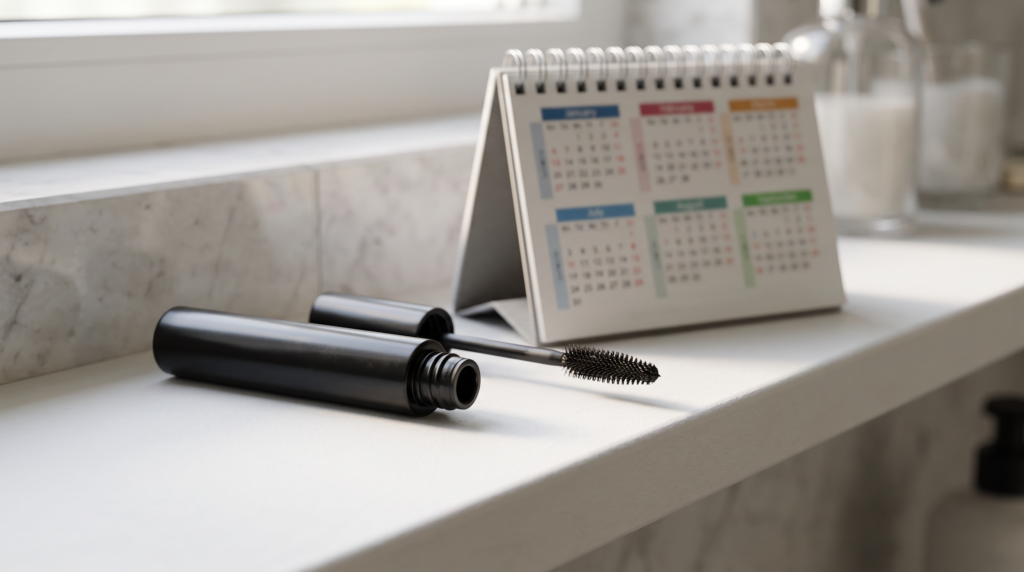
You bought a tube of mascara in the spring, and it is still in your makeup bag. It looks fine, it still coats your lashes, and throwing away something that is not empty feels wasteful. Eye-health organizations nonetheless ask you to do exactly that, usually after about three months.
The reason is not that mascara turns toxic on a schedule. A mascara tube is a small, closed container that your own lashes touch every day. Each time the wand goes in and out, it can carry a few of the microbes that normally live on lashes and eyelids into the formula, where preservatives have to keep them in check.
This guide explains what the three-month advice rests on, what a small contamination study actually found, how to tell when a tube has to go sooner, and which everyday habits matter most. It is general information, not a diagnosis, and it cannot replace an eye exam.
The US Food and Drug Administration notes that eye cosmetics are usually safe when you buy them, but misuse can let bacteria or fungi grow in them, and in rare cases infections from eye cosmetics have caused serious harm. Its eye cosmetic safety checklist is a handy reference to keep nearby while you read.
Key Takeaways
- The American Academy of Ophthalmology advises throwing away eye makeup about three months after purchase, and immediately if an eye infection develops.
- In a small pilot study, microbes were found in about 36% of mascara tubes after three months of daily use. That is evidence of contamination, not of infection.
- There is no single legal expiry date for opened mascara. Three months is a cautious guideline, and some sources quote three to four months.
- Throw a tube away sooner if it smells off, clumps, dries out, or you get red, sore, or watery eyes while using it.
- Never add water or saliva to revive dry mascara, never share it, and always remove it before sleep.
- Eye pain, vision changes, light sensitivity, or discharge need a licensed eye-care professional, not a new tube of mascara.
Where does the three-month rule come from?
The rule is a precaution that has settled into consistent advice rather than a single law. The American Academy of Ophthalmology says eye makeup should be discarded three months after purchase, or right away if you develop an eye infection while using it. Other health systems and consumer-health sites repeat the same window, and some give a range of three to four months.
One hospital health library points out that there are no formal guidelines for how long cosmetics should be kept, and that experts suggest changing mascara and eyeliner every three to four months to reduce infection risk. That honesty is worth keeping in mind. The number is a sensible safety margin, not a measured point at which a tube becomes dangerous.
Why does mascara pick up bacteria in the first place?
Eyelashes naturally carry bacteria. As soon as an applicator touches the lash line, it can pick some up and bring it back to the tube. Mascara is also a damp, enclosed product that is opened and closed again and again, and the wand pulls fresh air into the tube with every use.
Manufacturers add preservatives to hold microbial growth back, but preservatives have limits. Eye-care sources describe them as a buffer that wears down with repeated opening, warm storage, and contact with the lash line.
What did the mascara contamination study find?
The best-known evidence behind the guideline is a pilot study published in the journal Optometry in 2008. Forty women were randomly assigned one of two brands of non-waterproof mascara, all unexpired and bought on the same day, and asked to use it daily on upper and lower lashes for three months.
Tubes were returned by 33 of the 40 women who started. Microbial growth was found in 36.4% of the tubes collected. Based on growth on selective media, the organisms were mostly Staphylococcus epidermidis, Streptococcus species, or fungi. The authors recommended a maximum of three months of use for a mascara tube used daily, and said more frequent replacement might be warranted with further study.
What can this study not tell us?
It is worth reading the result carefully. It was a small pilot study with two brands, and the researchers did not try to count how many microbes were present. Finding microbes in a tube does not mean the user developed an infection. The study supports the three-month guideline as a cautious cutoff, but it does not show that every tube becomes unsafe at day 91.
A larger UK study from Aston University looked at donated, in-use makeup products including mascara and eyeliner. Its authors reported that most used products carried bacteria, and that products were often being used beyond their stated expiry dates. They concluded that clearer labeling and user education were needed. Again, contamination levels in used products are a reason for good habits, not a prediction that any one person will get sick.
Can old mascara actually cause an eye infection?
It can contribute, which is why eye doctors take the advice seriously. Contaminated cosmetics that touch the eye area can be associated with problems such as conjunctivitis (pink eye), eyelid inflammation, and a stye. Eyelid inflammation such as blepharitis is another common issue where makeup residue, oil-gland blockage, and bacteria can overlap.
There is also a mechanical risk. A dried, flaky formula or a wand that jabs your eye can scratch the cornea, and even a small scratch is an entry point for infection. The FDA specifically warns against applying or removing eye makeup in a moving vehicle for this reason, since a bump or sudden stop can drive a wand into the eye.
How do you know when to throw mascara away early?
The calendar is only one signal. Replace the tube sooner if you notice any of the following:
- A changed smell. Mascara that smells sour or different from when it was new should go.
- A changed texture or color. Clumpy, stringy, or dried-out formula is a sign the product has broken down.
- Flaking. Specks that fall into the eye can irritate or scratch the surface.
- Irritation while wearing it. Stinging, redness, itching, or watery eyes after application are reasons to stop using it.
- A recent eye infection. Throw away any eye makeup you used before or during the infection, even if it was new.
- Unknown age. If you cannot remember when you opened it, treat it as old.
Can you add water or saliva to revive dry mascara?
No. The FDA advises against moistening eye cosmetics with water or saliva, because doing so can bring in bacteria and dilute the preservative that is meant to protect the formula. Mouth bacteria in particular can grow in the tube and cause problems later. Pumping the wand in and out of the tube also pushes extra air in, so gently twirling it is the better habit.
If a tube has dried out, that is your cue to replace it, not to rescue it.
What habits help a tube stay safer for three months?
- Write the open date on the tube. A small label or a marker note on the bottom removes the guesswork.
- Wash your hands first. Hands carry bacteria that you do not want near your lash line or inside the tube.
- Keep it closed and cool. Store it away from heat and sun, and screw the cap on tightly. Steamy bathroom shelves are not ideal.
- Do not share. Another person’s bacteria or viruses can be transferred to you, and the same goes for store testers unless you use a single-use applicator.
- Use only the wand it came with. Do not dip an unclean tool in the tube.
- Avoid applying near irritated eyes. Skip eye makeup if your eyes are red, sore, or inflamed.
If you struggle to finish a full tube in three months, a smaller size or a lighter weekly routine may waste less product. Using less mascara less often does not make an old tube safe, though, so the opening date still matters.
Is it safe to sleep in mascara?
Eye-health groups generally advise taking mascara off every night. Residue left on overnight can migrate toward the eye surface, irritate the lids, and clog oil glands along the lash line. Gentle makeup removal with a soft pad and an oil-free eye makeup remover is easier on the lashes than scrubbing, and it avoids pulling on the hairs.
If you also use tools on your lashes, a clean, well-padded eyelash curler used on clean, dry lashes is gentler than one pressed hard on a coated lash.
What about eyeliner, eyeshadow, and other eye makeup?
The same logic applies to anything that touches the lash line or lid. Liquid and cream products are generally treated as the most perishable, which is why mascara and liquid eyeliner get the strictest advice. One health system notes that powder eyeshadow can also pick up bacteria if the brushes are not kept clean.
- Liquid or gel liner: follow the same three-month window as mascara.
- Pencil liner: sharpen before use, since sharpening removes the outer layer that touched your eye.
- Powders: keep the case closed and wash brushes regularly.
- Glitter and sparkly products: some eye-health sources recommend avoiding them because flakes can irritate or scratch the eye.
- Lip liner: do not use it on the eyes, since it can bring mouth bacteria near them.
Check the label for any specific “period after opening” symbol, and follow whichever limit is shorter.
What if you wear contact lenses or have sensitive eyes?
Contact lens wearers have a little less margin for error because particles and flakes can get trapped between the lens and the eye. If you wear lenses, put them in before applying mascara and take them out before removing makeup, and talk to your eye doctor about products that suit you. Our guide to contact lens routines with eye products explains the same hands-first, lenses-first order in more detail.
People with a history of eyelid inflammation, allergies, or very reactive eyes may want to replace products more often and to ask an eye doctor which ingredients to avoid.
What should you do after an eye infection?
Replace everything that touched your eyes. The American Academy of Ophthalmology says eye makeup should be thrown away immediately if you develop an infection while using it, and another consumer eye-health source adds that makeup used before or during an infection should be discarded even once you have recovered. Contaminated products can reintroduce the problem, so wait until a doctor says your eyes have healed before using fresh products.
Does old mascara cause eyelash loss?
Mascara itself is not a typical cause of lash loss, but inflamed or blocked follicles and oil glands along the lash line can contribute to thinning, according to one UK eye-health charity. Rough removal, pulling, and curling coated lashes can break hairs too. If you are noticing eyelash loss along with crusting, redness, or itching, an eye-care professional can check for lid inflammation or other causes.
If you use a lash growth product, the usual advice is to read its label and talk to a clinician about timing with makeup. Our guide to lash serum with makeup covers the practical side, and the replacement rule for mascara stays the same either way.
When should you see an eye doctor?
Contact a licensed eye-care professional promptly if you have eye pain, vision changes, light sensitivity, a lot of discharge, swelling that spreads, or redness that does not settle within a day or so. If you have a contact lens in and your eye is red and painful, take the lens out and get seen. A new tube of mascara will not fix an infection, and delaying care is the bigger risk.
Frequently Asked Questions
How often should you replace mascara?
The common guideline from eye-health groups is about every three months after opening or purchase, and immediately after an eye infection. Some sources give three to four months. If it smells, clumps, or dries out sooner, replace it sooner.
Does mascara expire if you never opened it?
An unopened tube is not being contaminated by your lashes, but it can still age. Many products carry a printed shelf life or batch code, so check the packaging. The three-month clock is generally counted from when you start using it.
Can you use waterproof mascara longer than regular mascara?
There is no good evidence that it lasts longer. The study behind the guideline used non-waterproof mascara, so it cannot answer that question. The safest approach is to apply the same three-month rule to any type.
Is it okay to share mascara with a friend?
Eye-health sources advise against it. Sharing can transfer bacteria and viruses between people, and the FDA also recommends using single-use applicators if you must try a store tester.
Can you clean mascara to make it last longer?
You can wipe the outside of the tube and keep the wand clean, but you cannot reliably disinfect the formula inside. Adding water, saliva, or alcohol to the product is not recommended, because it can weaken the preservatives.
What are the signs of an eye infection from makeup?
Common signs include redness, itching, burning, swelling, a gritty feeling, watering, and discharge. Stop using the product and see an eye doctor if symptoms persist or if you have pain, vision changes, or light sensitivity.
This article is for general information only and is not medical advice. For eye or eyelid concerns, talk to a licensed clinician.
Sources
- U.S. Food and Drug Administration, “Eye Cosmetic Safety.”
- American Academy of Ophthalmology, “Eye Makeup Safety Tips.”
- Optometry, 2008;79(10):587-593, “Microbial contamination associated with mascara use.” (PubMed ID 18922495)
- Bashir A., Lambert P., Aston University, “Microbiological study of used cosmetic products: highlighting possible impact on consumer health,” Journal of Applied Microbiology.
- Cedars-Sinai Health Library, “Old Makeup Can Cause Serious Eye Infections.”
- All About Vision, “How do you treat an eye infection from makeup?”
- Sutter Health, “Eye makeup” guidance.
- Guide Dogs (UK), “Makeup tips for eye safety and care.”